
GEOROUTE 5 – ANCÓN JUNCTION- ANCÓN VALLEY

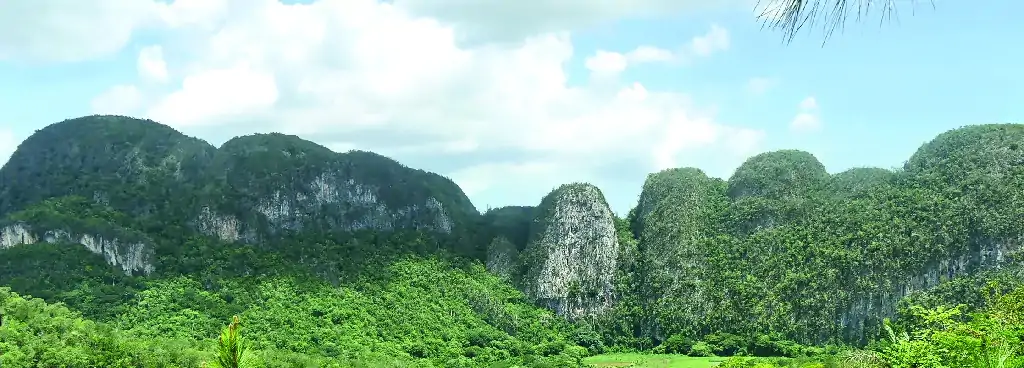
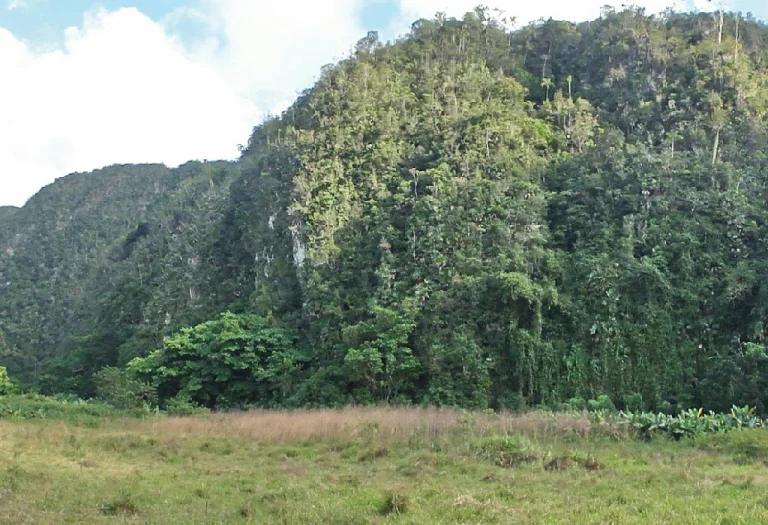
Panoramic view of the Mountains and Gap of Ancón, spring of the Abra River, and violet limestones of the Ancón Formation.

Difficulty
BY CAR EASY
ON FOOT EASY
Categorías geológicas
MOGOTES
ROCKS
CAVES
GEOLOGICAL RESOURCES

Duration
2 HRS

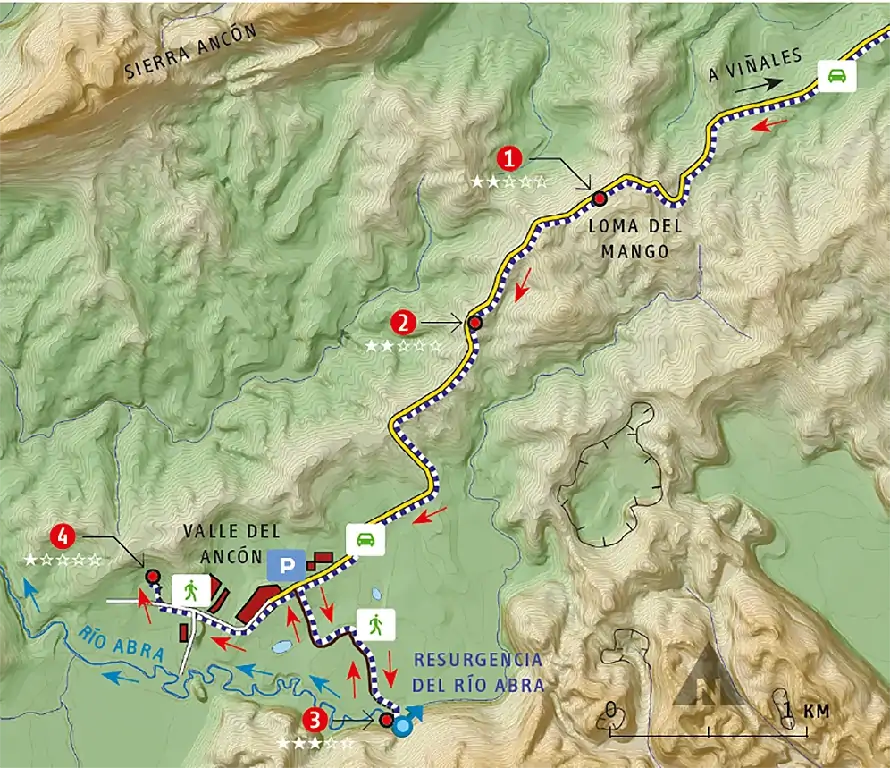
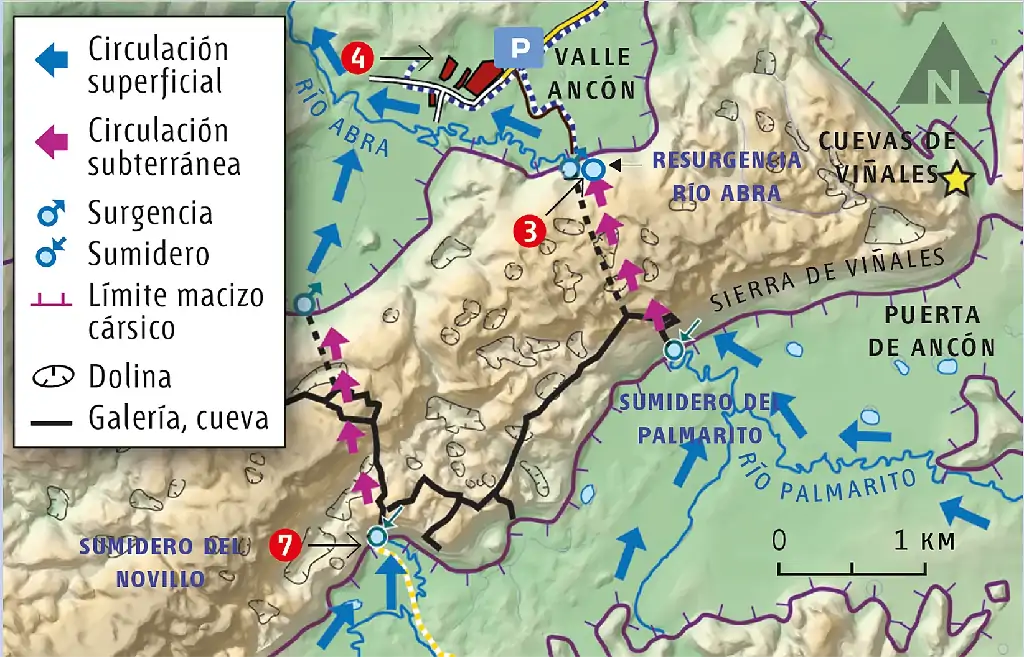
Itinerary through the Ancón Valley, with views of the Ancón Mountains and the gap that cuts the mountains in two. The entrance to the spring cave of the Abra River is visited. This underground river is the outlet of the Palmarito River, which on the other side of the Viñales Mountains, more than 1.5 km away, goes underground at the sinkhole also called Palmarito.


GEOSITES

1. Loma del Mango

Slaty rocks

San Cayetano Formation

Karst evolution of the valley

2. Ancón Gap

Narrow valley separating two mountains

Karst canyon

Karst evolution of Viñales Valley

3. Palmarito Spring - Gap

River emerging from a cave

Resurgence

Karst

4. Paleocene Limestones

Violet-colored limestones

Limestones of the Ancón Formation

The stratigraphic column
CURIOSITIES

THE KARST SYSTEM OF PALMARITO-NOVILLO: THE LARGEST CAVE IN CUBA

The special morphology of the Viñales area owes its origin to karst processes. Water dissolves the limestones, forming caves, sinkholes, underground rivers, canyons, etc. But this process in a tropical climate gives rise to more extreme forms than in colder climates, resulting in the emblematic figures of the mogotes and gaps. It is worth highlighting this as a very important karst process found in few karst areas of the world. It involves the existence of rivers that have sections flowing on the surface and others underground. In this area, there are several cases, such as Zacarías (itineraries 2 and 4), which goes underground and resurfaces in the Indio Cave, the Santo Tomás karst complex (itinerary 8), and the Palmarito and Novillo rivers, which after flowing on the surface for several kilometers, cross the Viñales Mountains underground to emerge in the Ancón Valley, forming the Abra River.

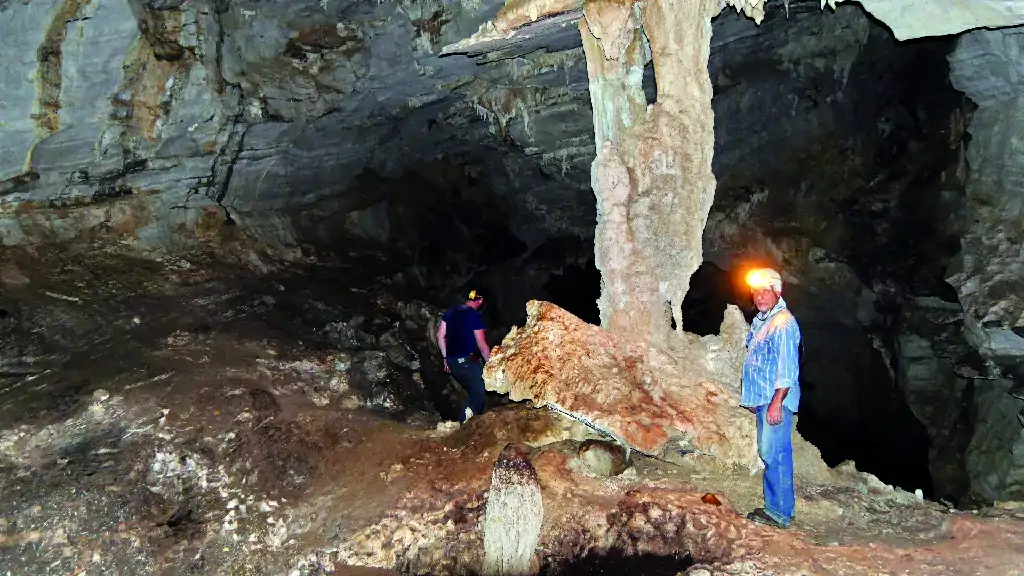
But what we see today is the result of millions of years in which the underground rivers descended to the current height. This implies the formation of kilometers of underground galleries that have been abandoned and are now dry. Over decades, speleologists have explored both these dry galleries and those through which the underground river flows, with the spectacular result that the Palmarito-Novillo cave system has more than 59 km of passage. In 1954, Dr. Antonio Núñez Jiménez first cited the existence of the Palmarito underground river, saying: "It is curious that all these valleys communicate with each other through underground riverbeds: from Viñales, one can pass to the Ancón Valley, located to the north, through the cave that serves as the bed of the river of the same name (Palmarito). Starting in 1968, speleological explorations began by Cuban groups and mixed groups with Spaniards and English, which have continued to the present. During these explorations, a topographic map has been drawn up that allows knowing the route of the galleries. The data from the last expedition in 2019 show that, with the current route of 59 km, it is the longest cave in all of Cuba. The explorations in 2000 of a siphon in the spring of Palmarito by the group of the Spanish television program "Al Filo de lo Imposible" (At the edge of the impossible) stand out.

Scroll to Top

GEOSITE 1 - LOMA DEL MANGO

Slaty rocks

San Cayetano Formation

Karst evolution of the valley

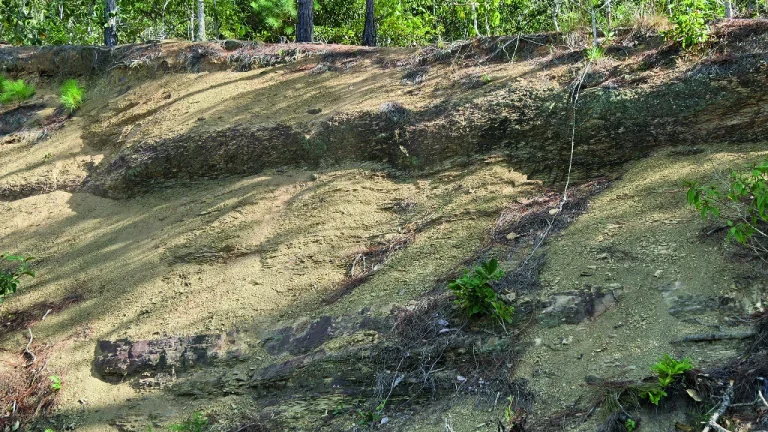
About 3 km from the Ancón junction, we park the vehicle and ascend a few meters on Loma del Mango, located on the left (south) side of the road. An extensive outcrop of fine, slate-like, and sandy rocks of beige-light color due to surface alteration can be observed on the ground.

It is a very important outcrop for geologists, as it is the San Cayetano Formation of Lower-Upper Jurassic age (between about 170-200 Ma), the oldest sedimentary rocks in Cuba. These rocks take on gray or dark gray colors, sometimes greenish, which when exposed to weathering take on reddish and brownish colors. They fragment with a flaky appearance and shiny luster. The layers are centimetric in thickness and are inclined to the north. This type of rock is easily erodible and not karstic; therefore, it gives gentle reliefs and the absence of caves and underground rivers. In this area, it outcrops forming a narrow, elongated strip with a NE-SW direction and is where the Ancón Valley has formed, bounded on both sides by the Viñales Mountains to the south and the Mountains Ancón to the north, both with limestones of the Guasasa Formation. At the top of the hill, we obtain a magnificent panorama of the Ancón Mountains and, in more detail, of the Cuevita Valley. It consists of a contact polje several tens of meters wide, with a greater length, reaching several hundred meters. The summit of the mogotes bordering the polje appears sinuous and majestic.

GEOSITIO 2 - ABRA DE ANCÓN

Valle estrecho que
separa dos sierras

Cañón de origen cársico

Evolución cársica del valle de Viñales

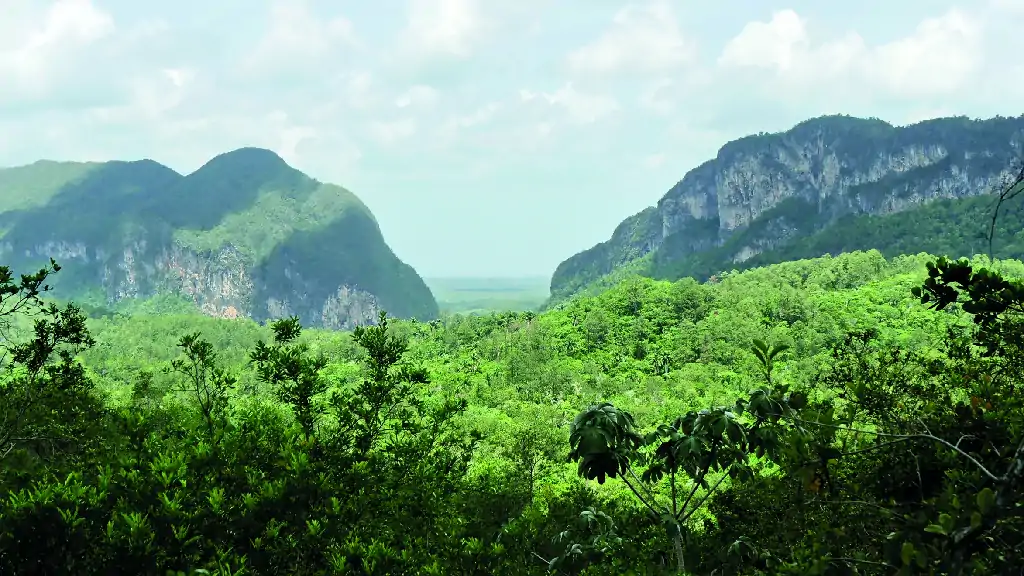
Seguimos por la carretera en dirección oeste y a unos 600 metros, se encuentra la segunda parada. A la derecha de la carretera (norte) se abre un claro entre el bosque que permi­te una panorámica espectacular del cañón cársico originado por el río Ancón, conoci­do como Abra de Ancón. Es el cauce fluvial activo más profundo de la región. Dicho río ha erosionado y profundizado este valle en las calizas masivas de la Formación Guasasa, observándose una diferencia de altura de más de 300 m, desde el cauce hasta la cima.  Este valle separa dos sierras: la del Abra a la izquierda y la de Ancón a la derecha, que originariamente era una sierra única.

GEOSITIO 3 - RESURGENCIA PALMARITO - ABRA

Río que sale de una cueva

Surgencia

El carso

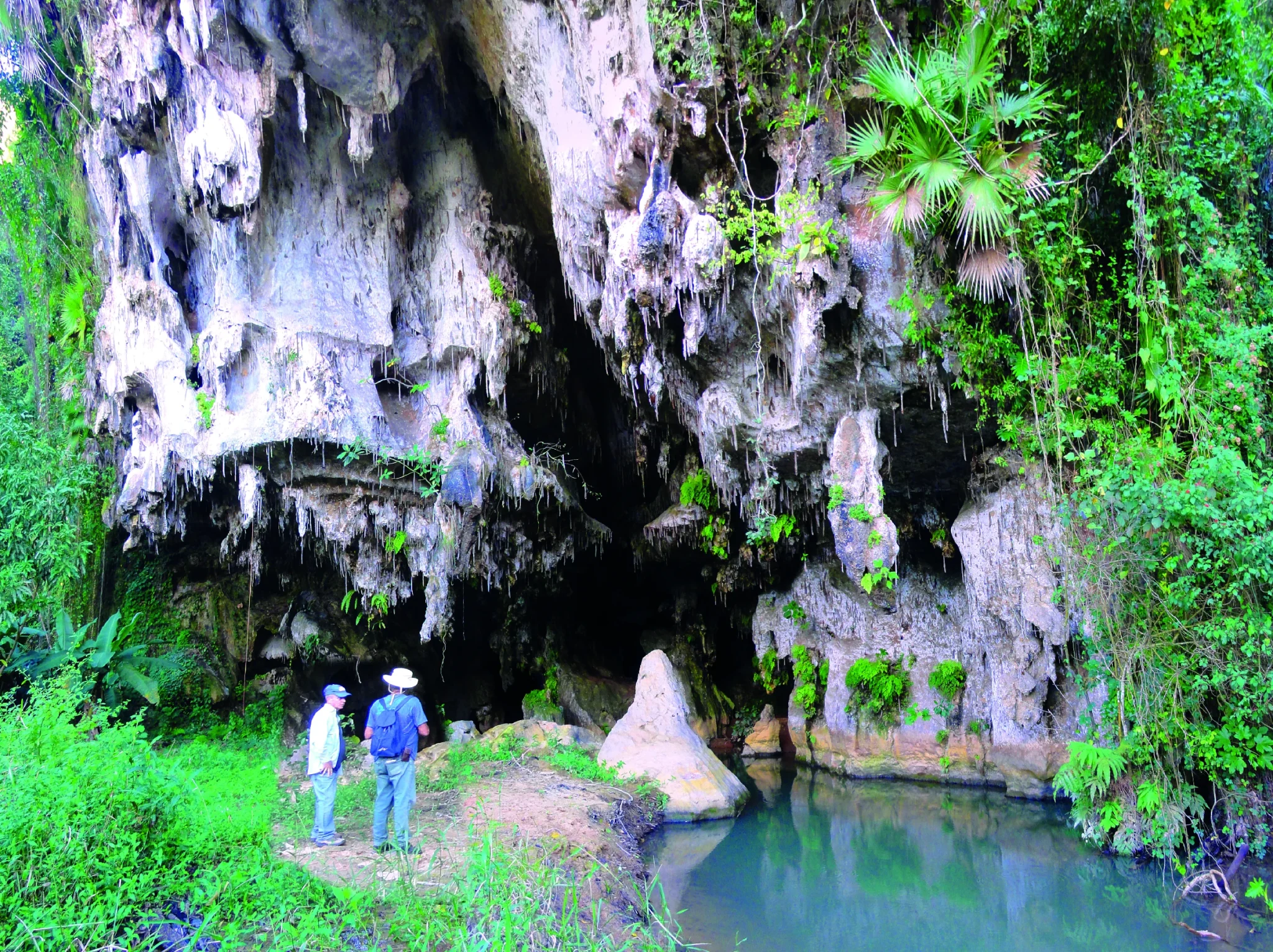
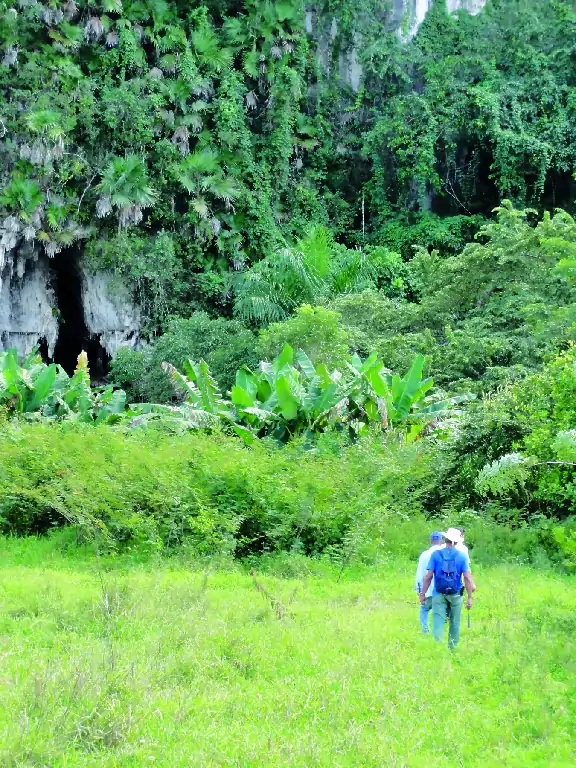
Seguimos la carretera y una vez en la mitad del poblado de Valle Ancón, se estaciona el vehículo y se coge una senda en dirección sur. A menos de un kilómetro se llega al río Abra, cuyas aguas surgen de una cueva con una boca de grandes dimensiones. Se trata de la resurgencia que da lugar a la fuente del río Abra. En realidad es río Palmarito que discurre superficialmente en las cercanías de Viñales en dirección de sur a norte y que, cuando llega a la sierra de Viñales, penetra en el interior a través del sumidero de Palmarito. Se convierte en un río subterráneo que vuelve a surgir a la superficie un kilómetro más al norte, a través de la resurgencia que estamos viendo. Estas cavidades forman parte de un sis­tema cársico complejo de más de 59 km de galerías originadas por el río Palmarito y el Novillo. El río Novillo tiene una situación pa­recida al Palmarito y su sumidero se puede visitar en la parada 7 del itinerario 6.

GEOSITIO 4 - CALIZAS DE PALEOCENO

Calizas de color violáceo

Calizas de la Formación Ancón

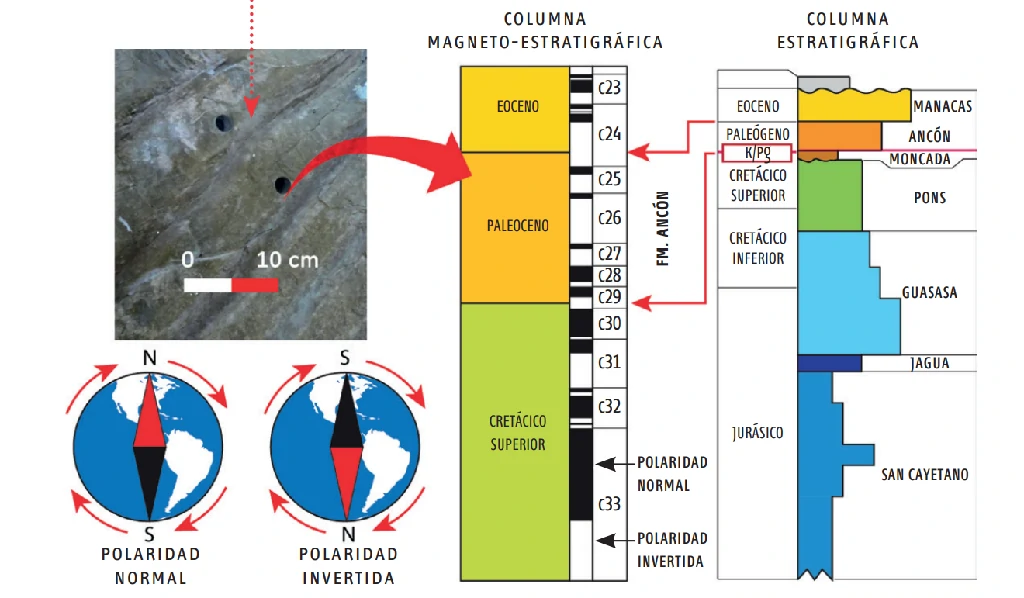
La columna estratigráfica

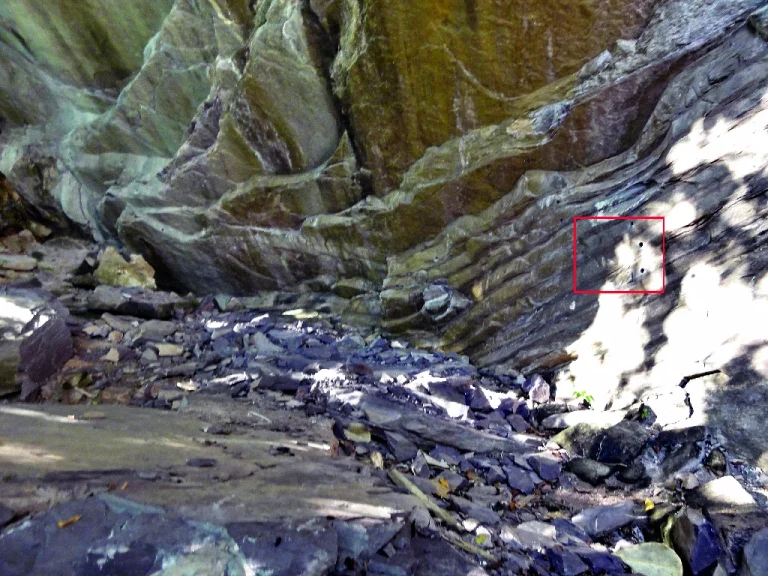
Regresamos al poblado de Ancón y podemos continuar con el vehículo hasta llegar a una zona militar. Estacionar el vehículo y se prosigue por un camino en dirección noroeste, a unos 300 metros hay que tomar una senda entre la vegetación en dirección noreste y en menos de 100 metros se llega a un pequeño farallón rocoso en donde se había extraído la roca para uso ornamental. Son calizas esquistosas y margas bien estratificadas de color violáceo, a veces gris claro a beige.

Los estudios al microscopio de estas rocas han descubierto la existencia de organismos milimétricos llamados foraminíferos que nos indican que tienen una edad Paleoceno (unos 60 Ma). Se trata de la Formación Ancón definida en esta localidad que le da nombre. Es un sitio importante para los geólogos ya que aporta mucha información sobre el lími­te Cretácico-Paleógeno (K/Pg). Si nos acerca­mos a la roca podemos ver unas pequeñas perforaciones redondas de 2 cm de diámetro. Se trata de muestras extraídas con el fin de saber su polaridad magnética. A lo largo del tiempo geológico los polos magnéticos de la Tierra no siempre han estado fijos.