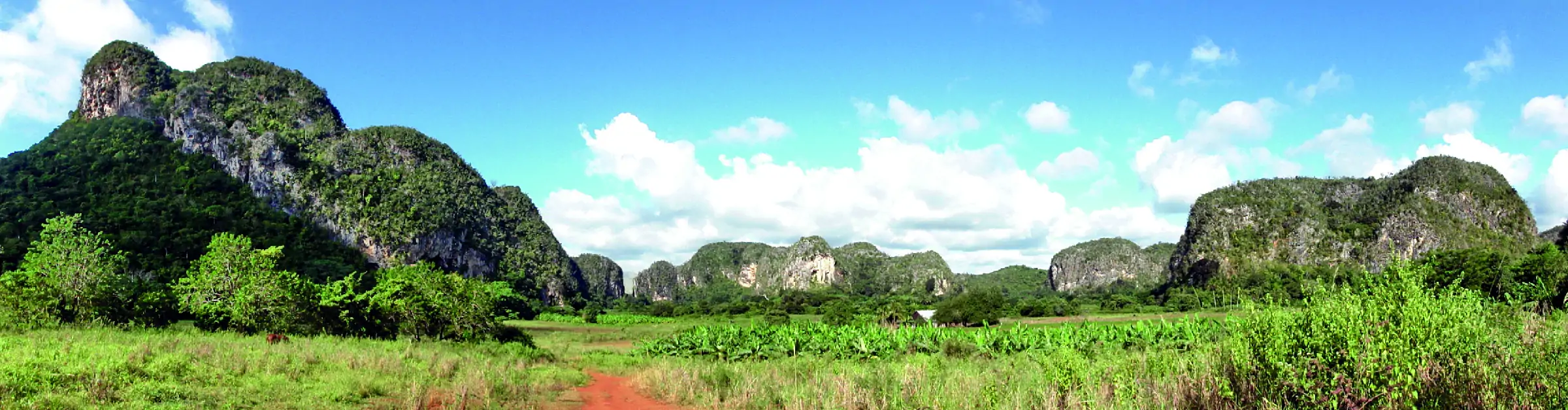
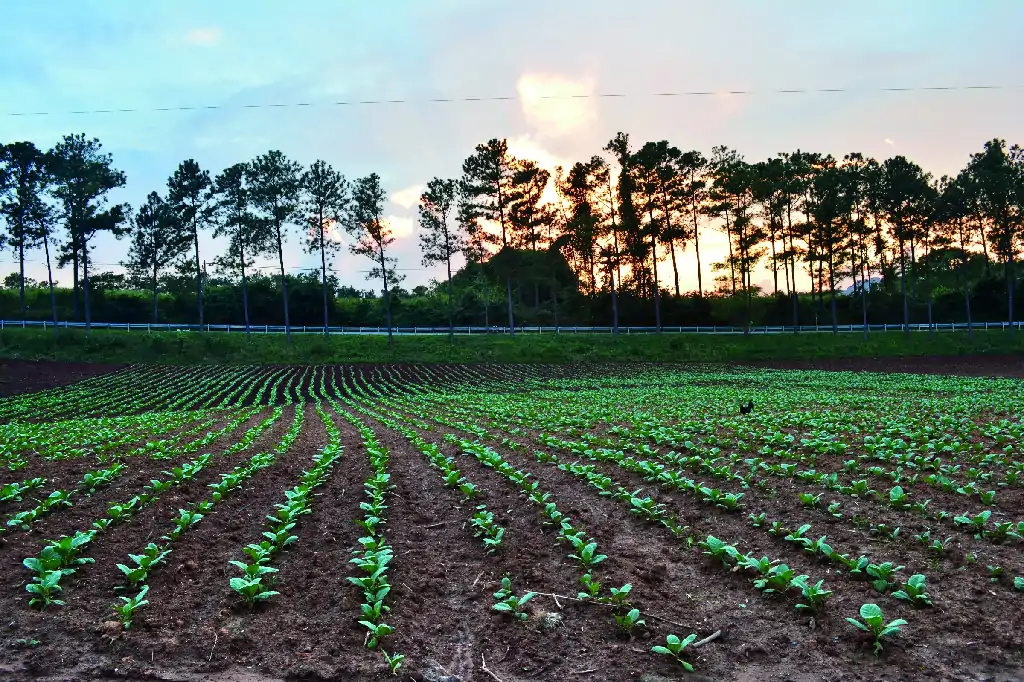
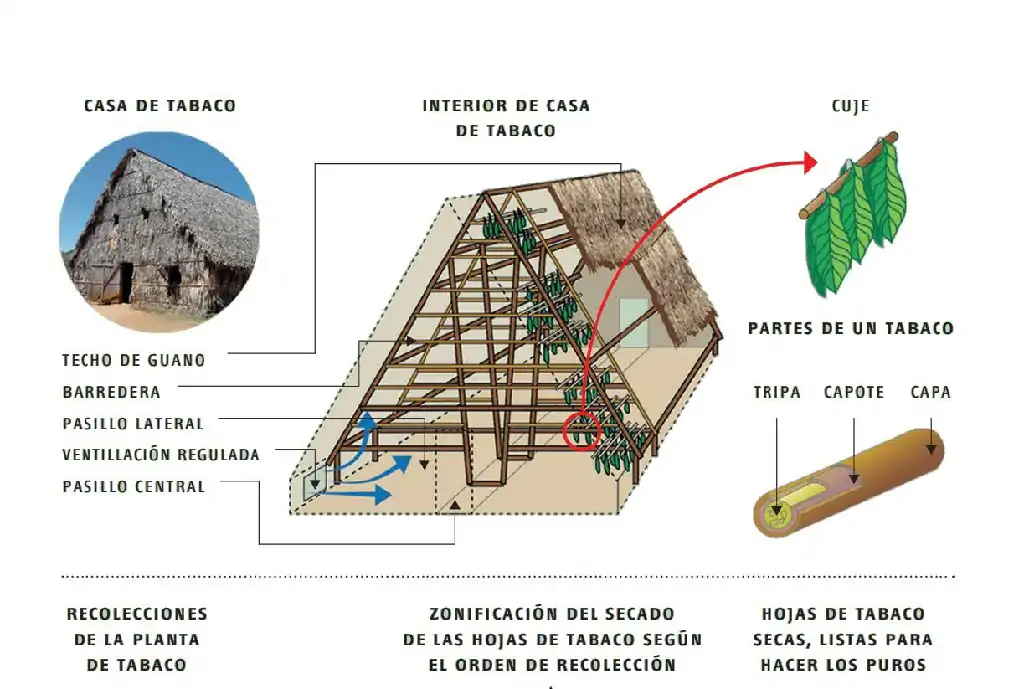
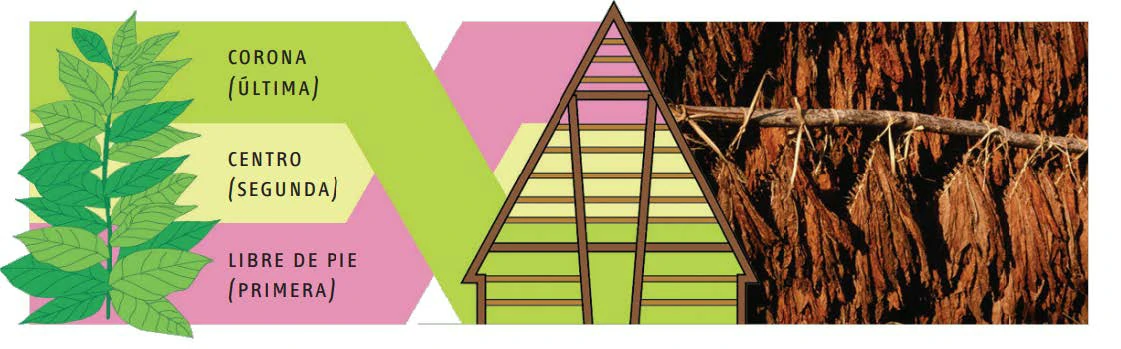
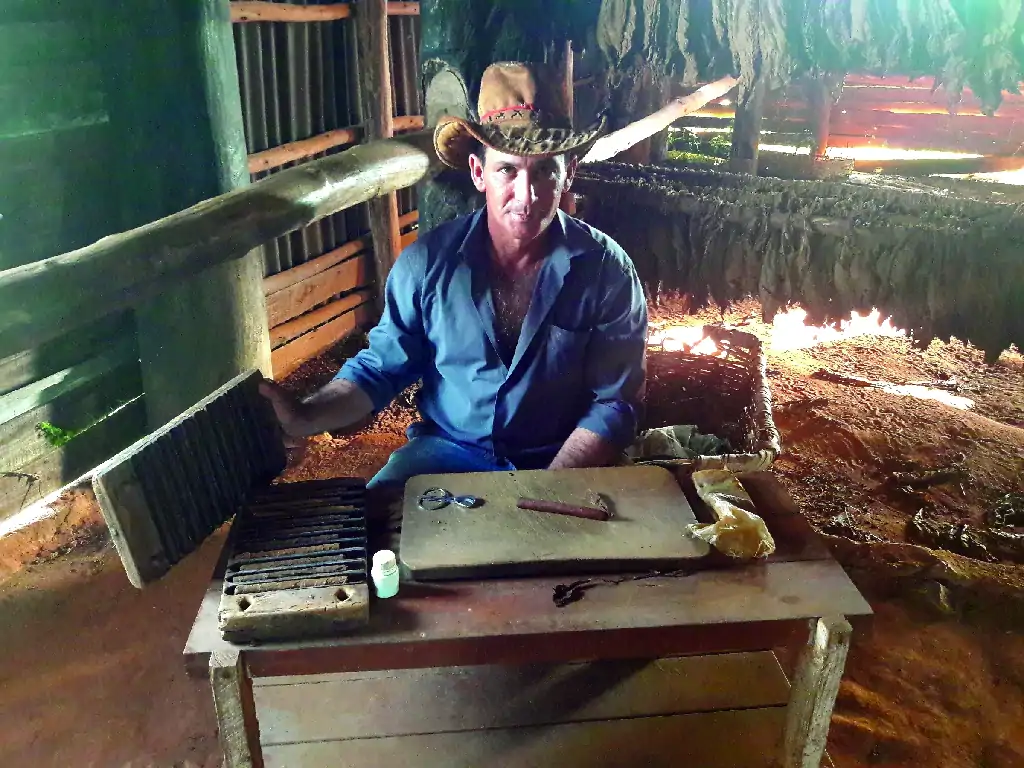
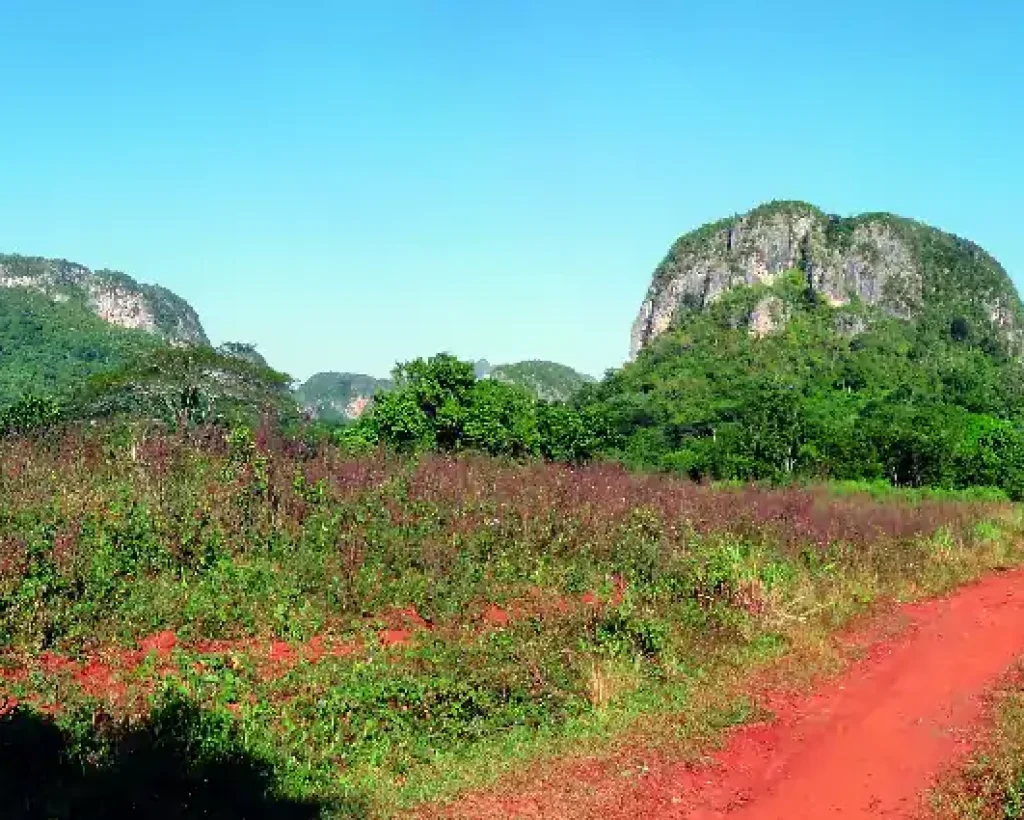
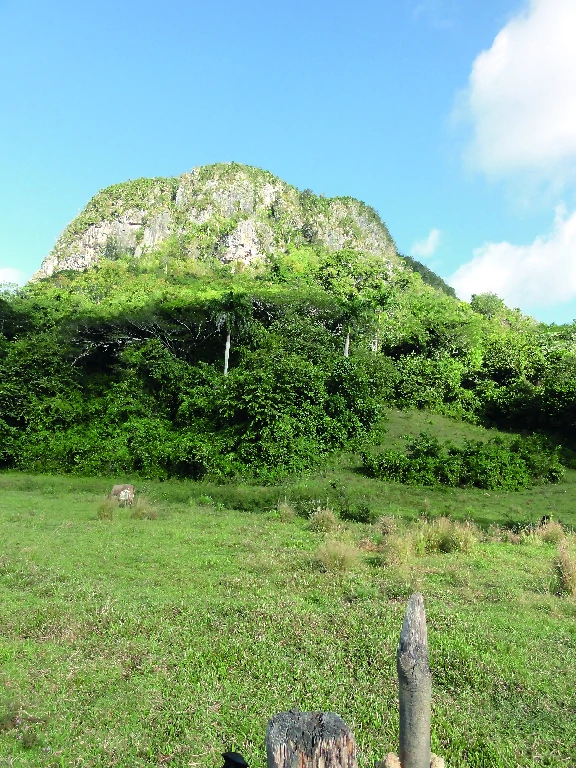
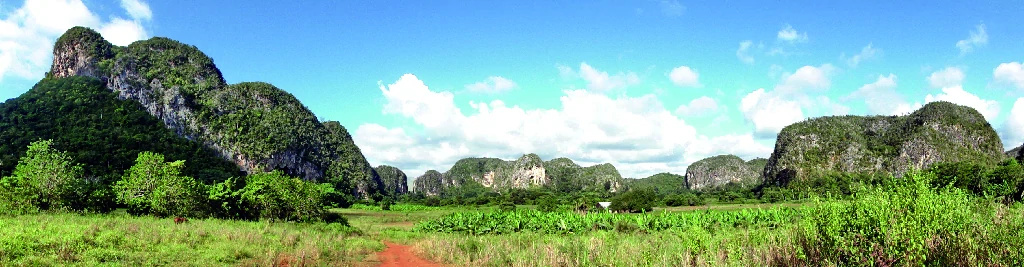
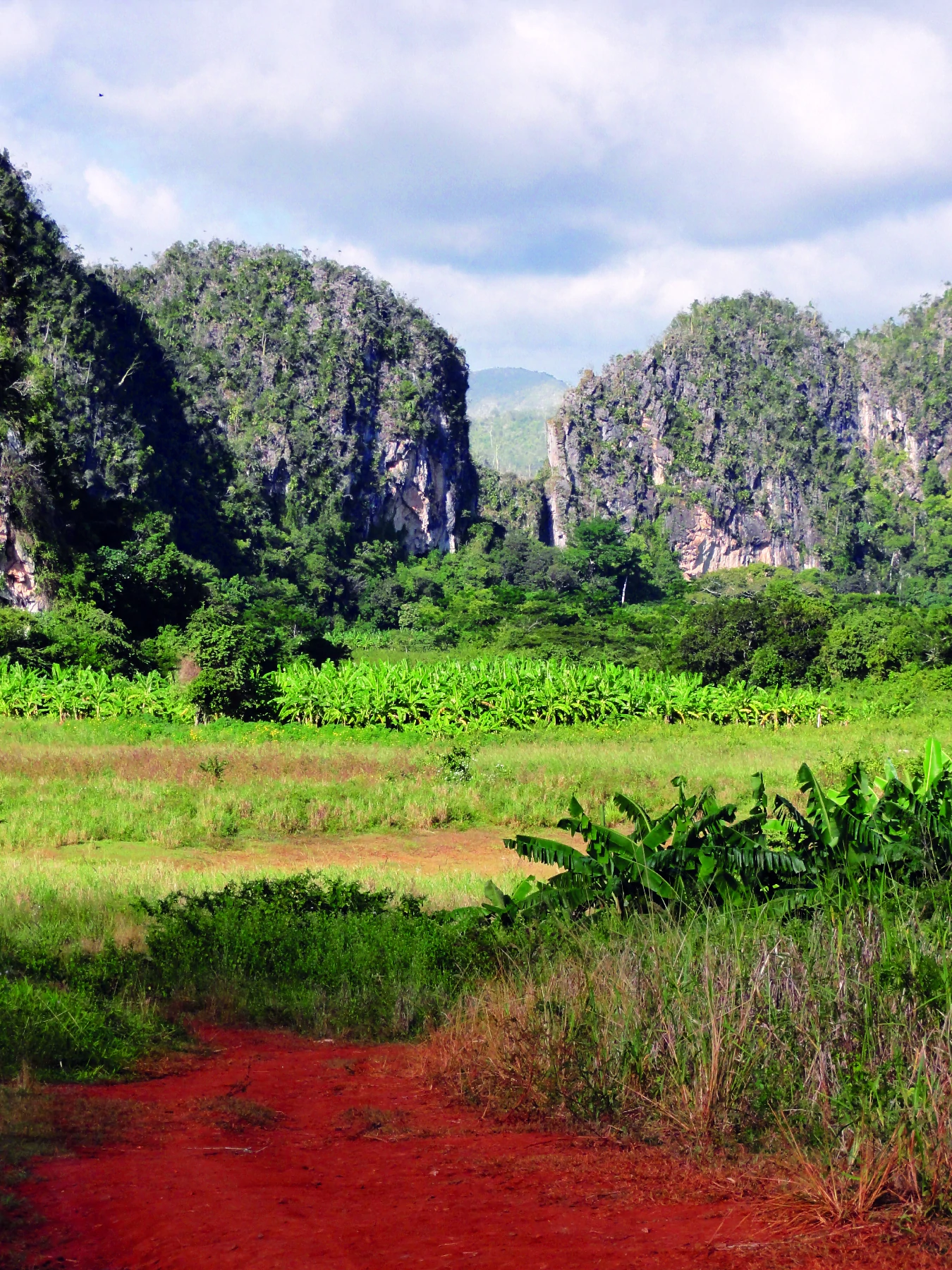
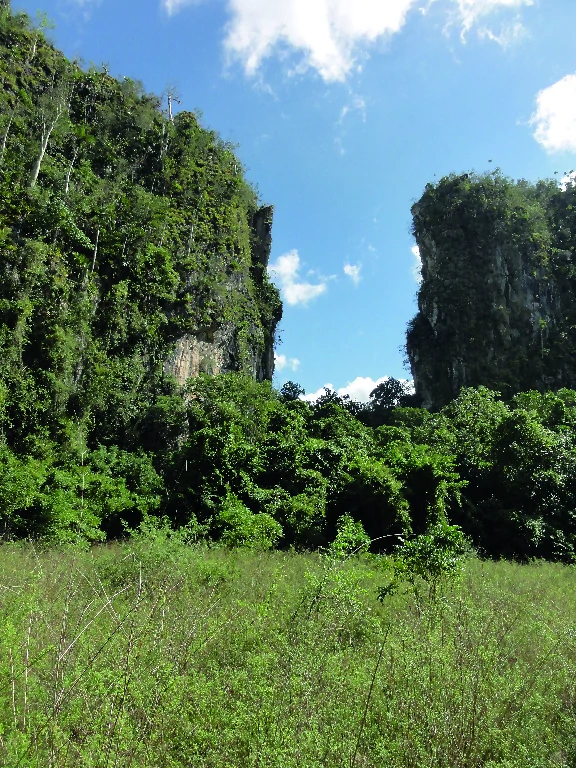
Cuba is the only country producing Havana cigars, a type of high-quality pure tobacco. In Pinar del Río province, and especially Viñales, the best tobacco in Cuba is grown. It is believed to be due to its special orography, which generates a microclimate favorable for tobacco cultivation. Generally, the seedbeds are planted in September, and after 45 days, the seedlings are ready for sowing. The plants grow for 3 to 5 months, reaching a height of up to one and a half meters. Subsequently, the leaves are harvested in three phases. In the first, the lower leaves (called libre de pie) are collected. The next are the intermediate leaves (centro and centro fino), and the last are the upper leaves (corona). This division of the plant implies cigars of diverse characteristics. The corona is the strongest, the center gives a soft and aromatic cigar, and the lower ones (libre de pie) are the leaves that burn best. The leaves are dried in the so-called "tobacco houses" for 2-3 months. It is a building with a steeply pitched roof, whose structure is made of wooden poles. The walls and roof are covered with guano (dried palm leaves). Inside, there is a true lattice of vertical and horizontal poles with a central aisle and several side ones. The leaves are sewn together and placed on poles, called cujes, which are placed on the transverse structures of the wooden lattice. The successive harvests are placed in the tobacco house according to three vertical zones: the first in the upper part and the last in the lowest. For optimal drying, in the tobacco house, there is always ventilation that can range from subtle to stronger depending on the moment of the process and the climate. Subsequently, the leaves are prepared for the fermentation process, which can last from 50 days to a year. Finally, only the cigar-making process remains. The "filler," the central part of the cigar, is prepared, wrapped with leaves without the central vein (fine center of the plant) called "binder," and finished with the so-called "wrapper."