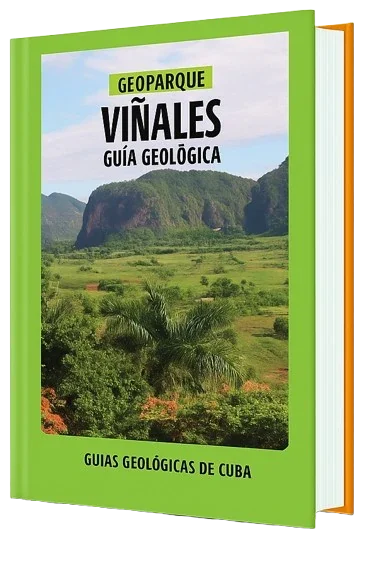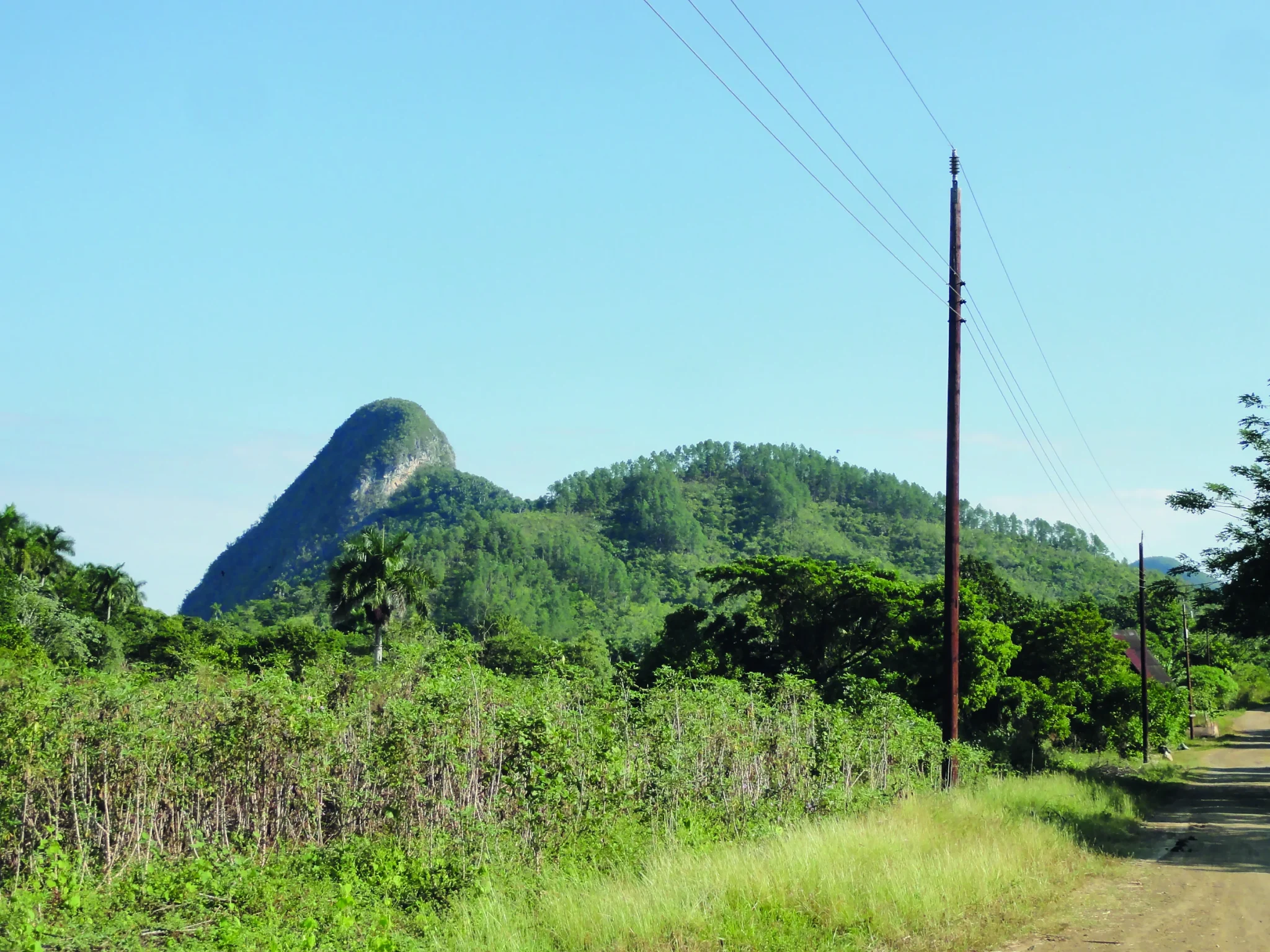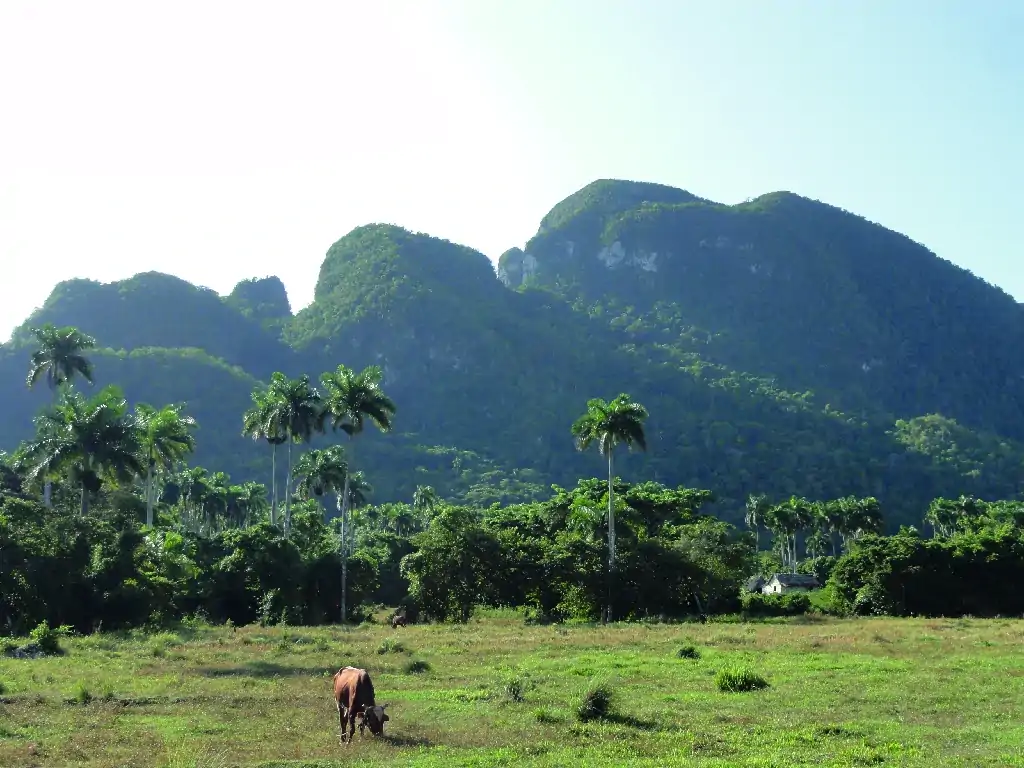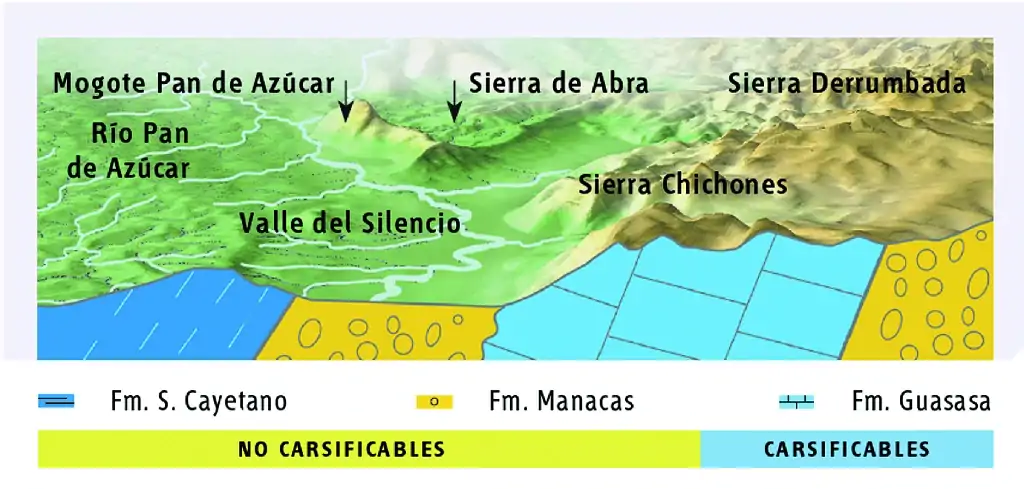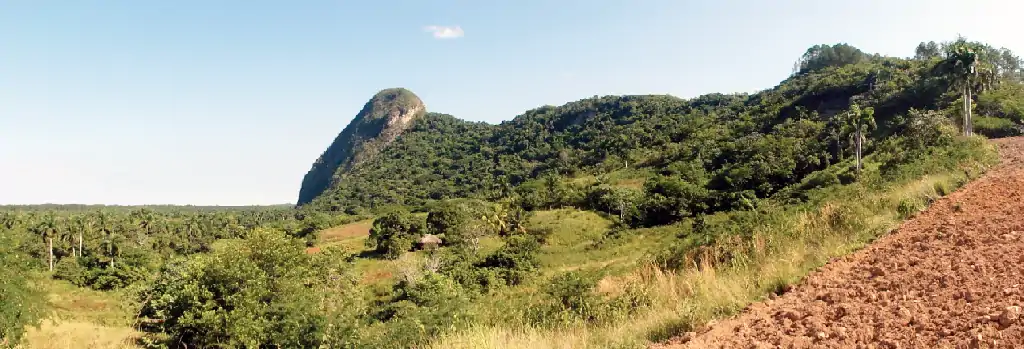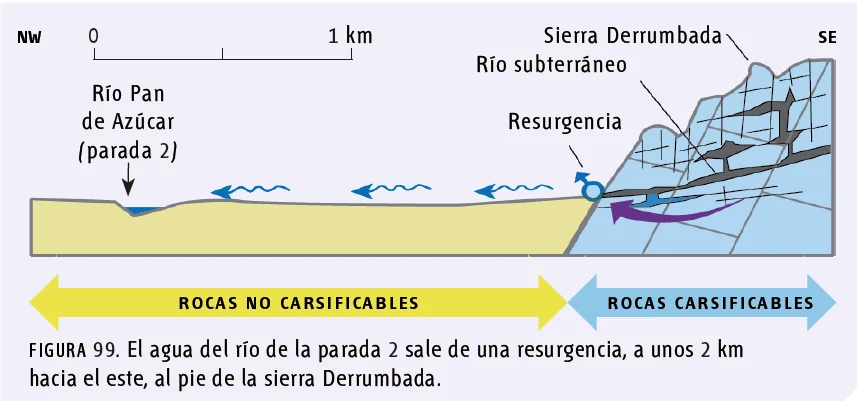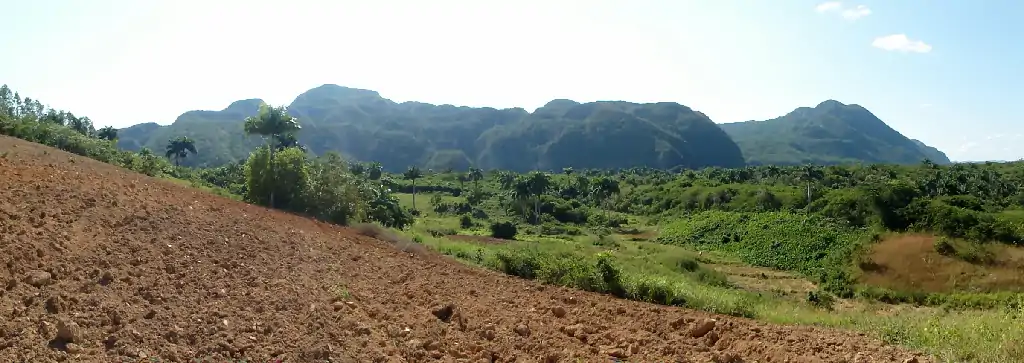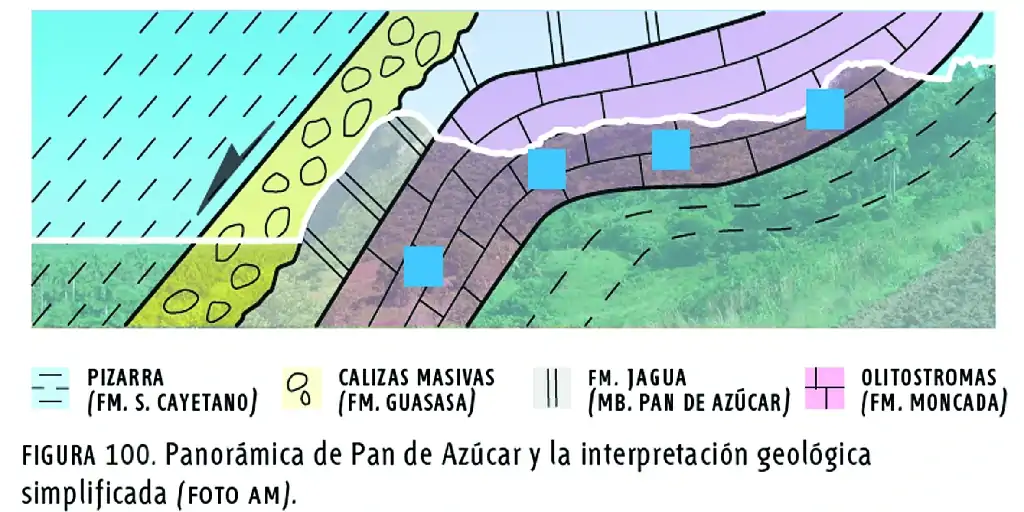

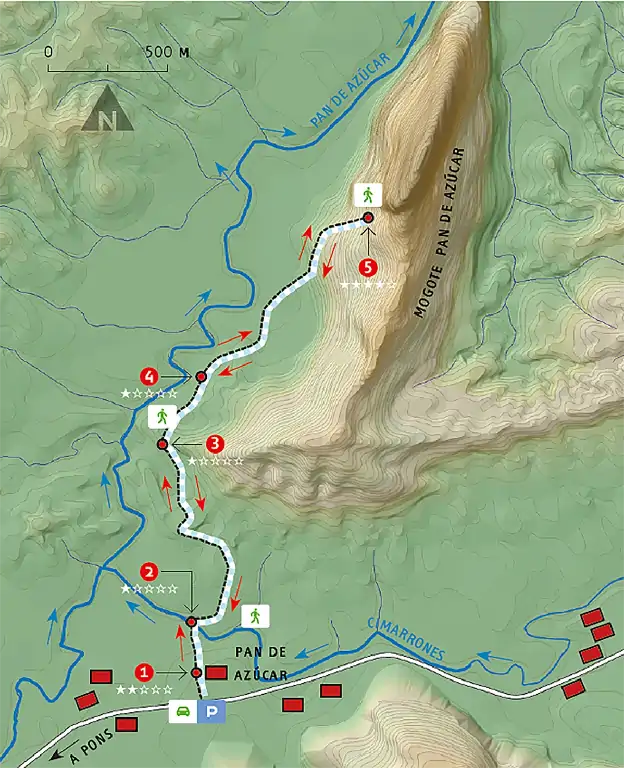
A round-trip route of about 5 km, crossing the Pan de Azúcar (Sugar bread) River, which emerges from the northern slope of the Derrumbada Mountains, responsible for carving significant cave systems in the region. Magnificent views of the mountains and mogotes, with abundant calcareous concretions ("cheeses") containing Jurassic macrofossils.









Sugar bread shaped mogote

Karst morphology

Karst

Surface river
Non-karstic zone
Karst
Diverse morphologies
Rocks of varying hardness
Tectonic structure of Viñales
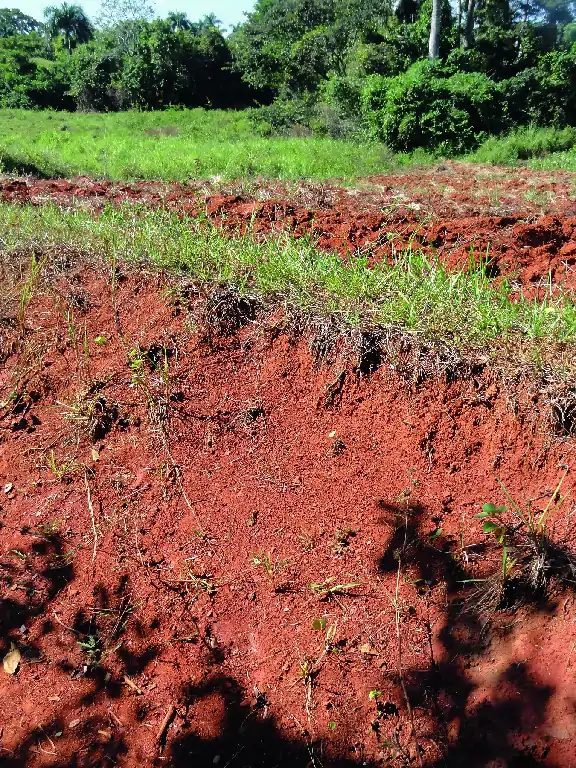
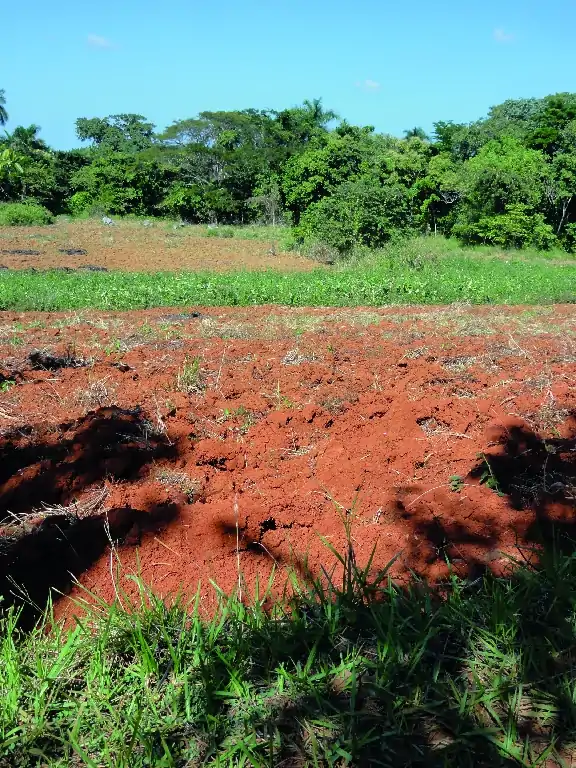
Reddish soil
Sediments from weathering
History of Viñales

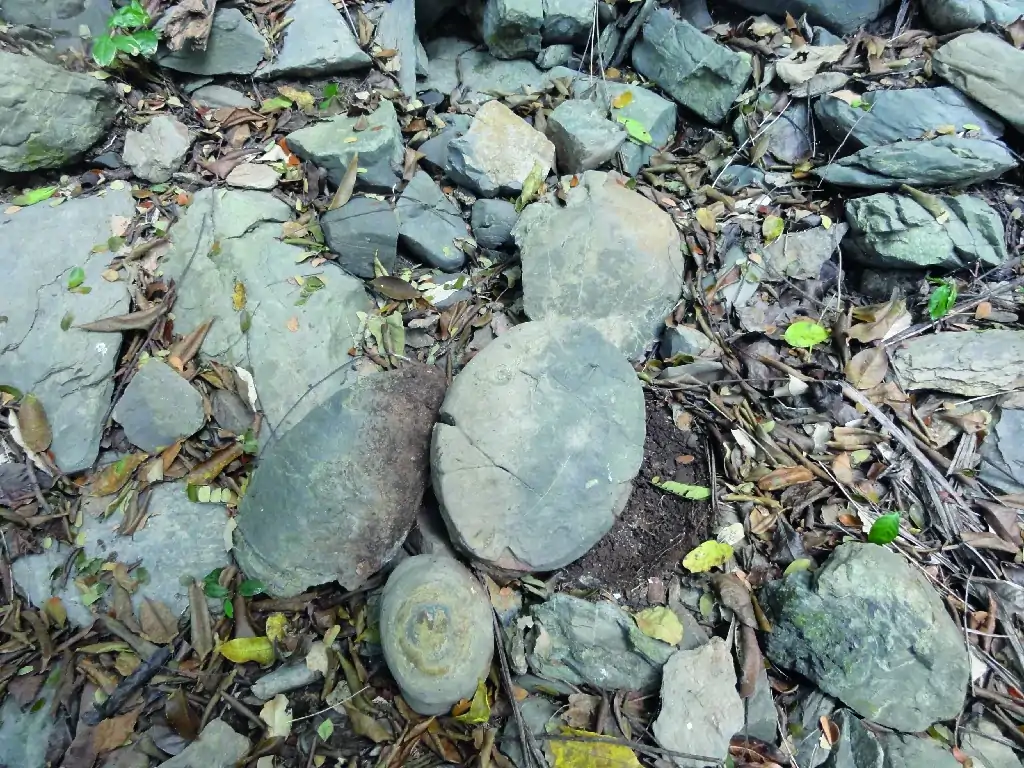
Rounded rocks with fossils
Calcareous concretions
History of Viñales
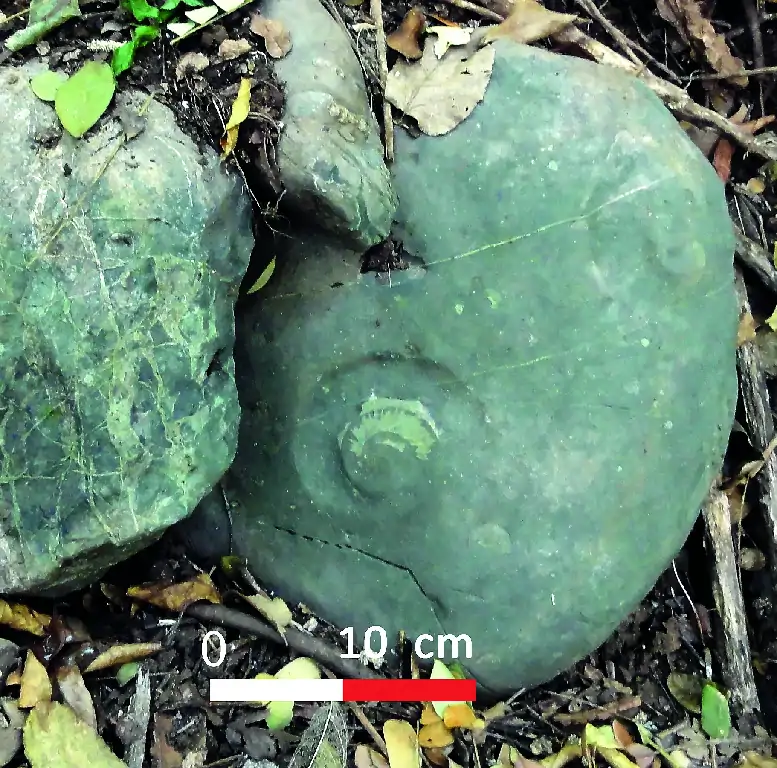
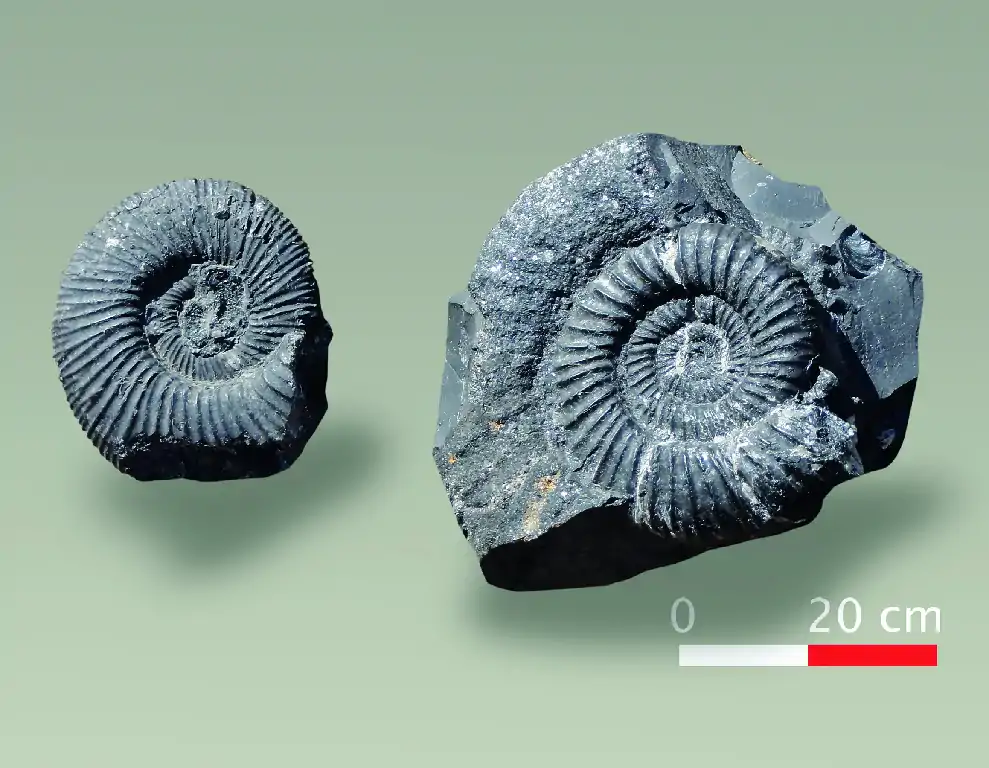
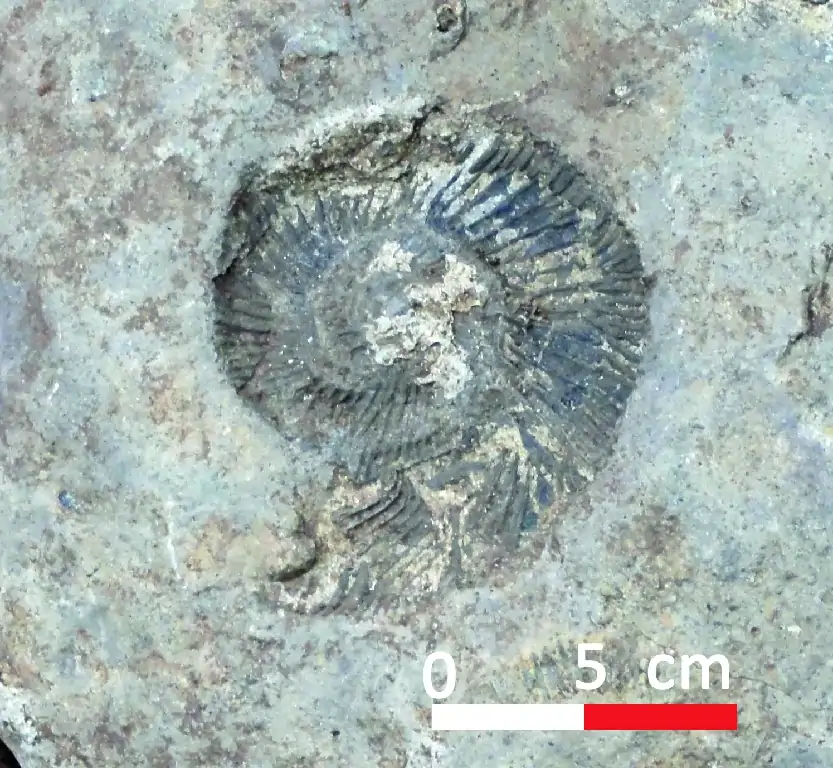
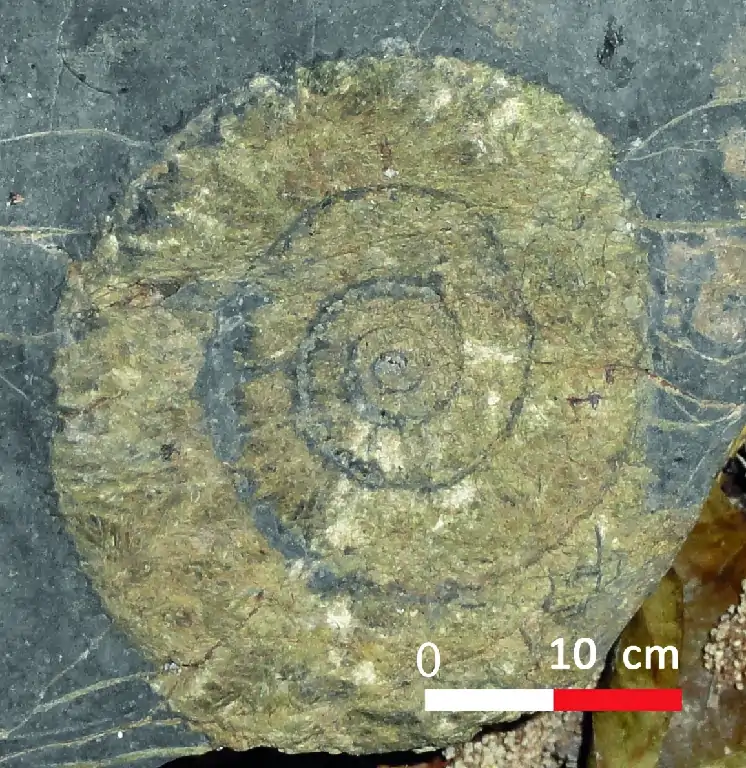
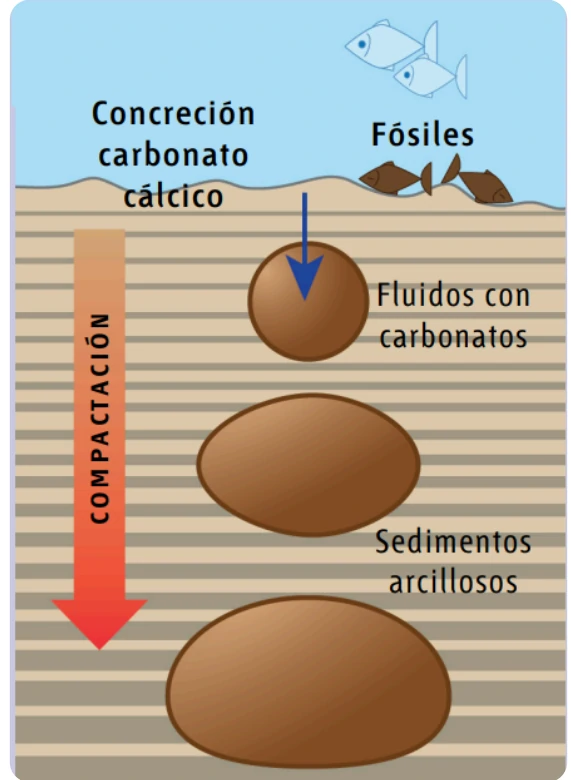
In the Viñales area, outcrops of rounded, often elliptical, rocks are found in numerous locations. They can be between 10 and 50 cm in diameter. The local people call them "cheeses" because of their resemblance to large round cheeses. These structures may contain fossil remains, both in the core and on the outside. The most abundant are ammonites, but reptile and fish remains have also been found. They are Jurassic in age, generally from the Oxfordian (between 155 and 160 Ma). These rocks are actually calcium carbonate concretions that form during sediment diagenesis, that is, the transformation of soft sediments from the seafloor into rocks. They form in marine basins where clays, materials with limited permeability, are abundant. When clayey sediments compact, permeability decreases vertically, giving rise to calcium carbonate concretions, forming spheres that gradually increase in volume and deform under the weight of the sediment, creating elliptical shapes. The presence of phosphates and bacteria involved in the decomposition of organic matter facilitate the precipitation of these carbonates. For this reason, fossils are frequently found inside the "cheese."
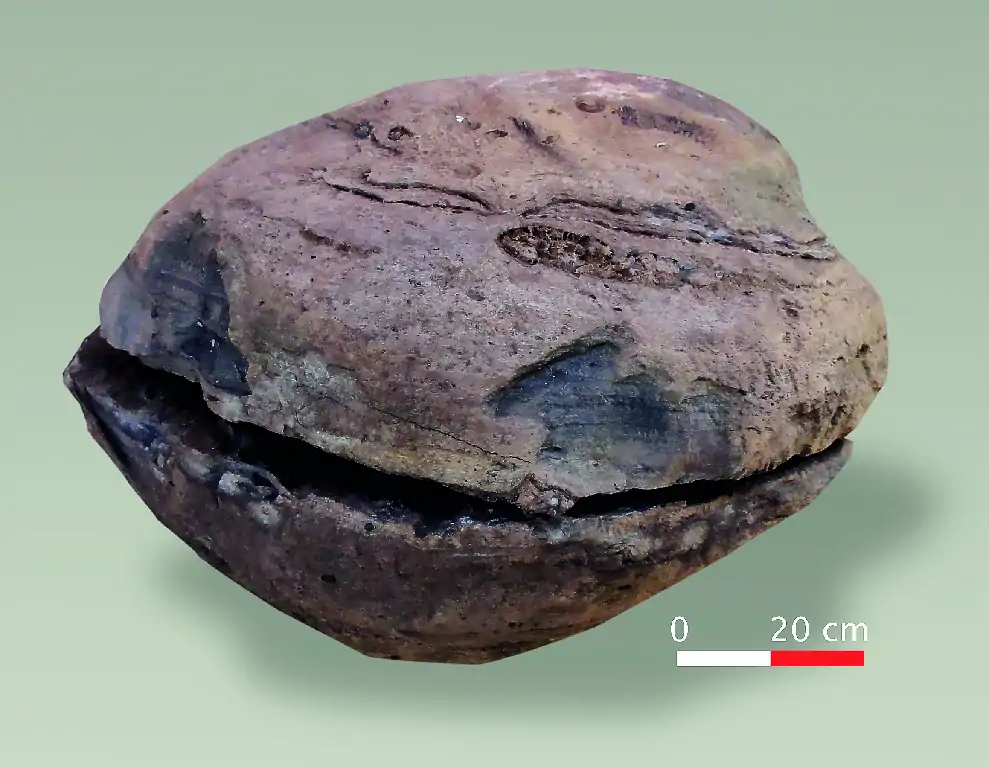
A large "cheese" cut open, revealing fossils inside.
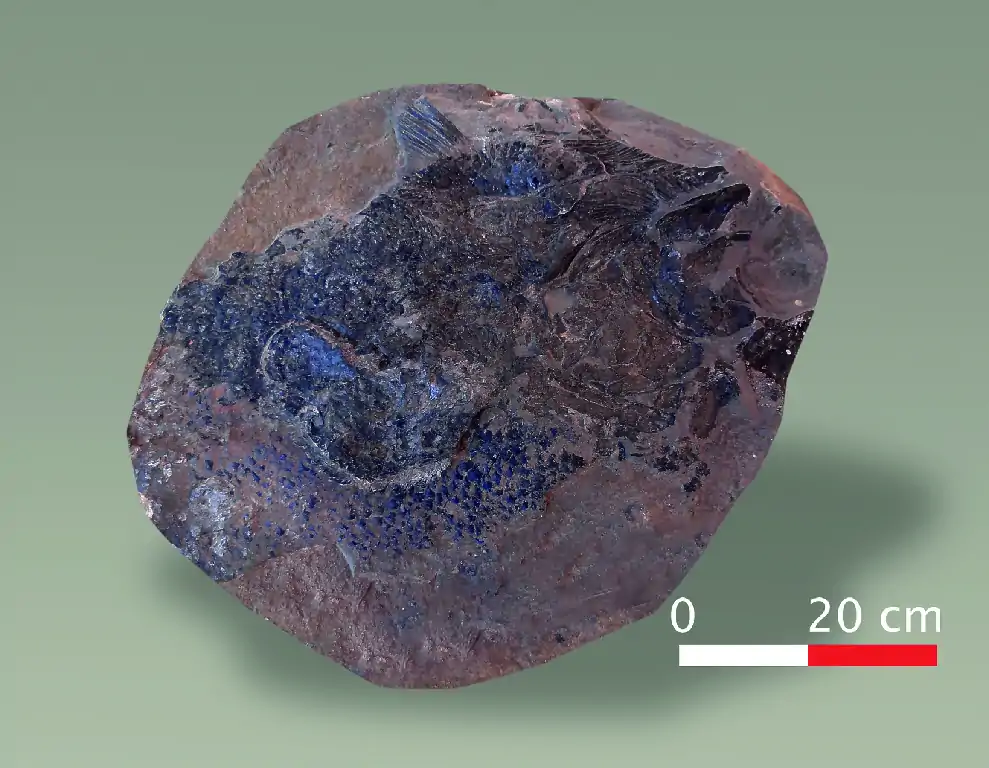
A large "cheese" cut open, revealing fossils inside.