GEOLOGY OF VIÑALES
THE GEOLOGICAL SETTING OF VIÑALES
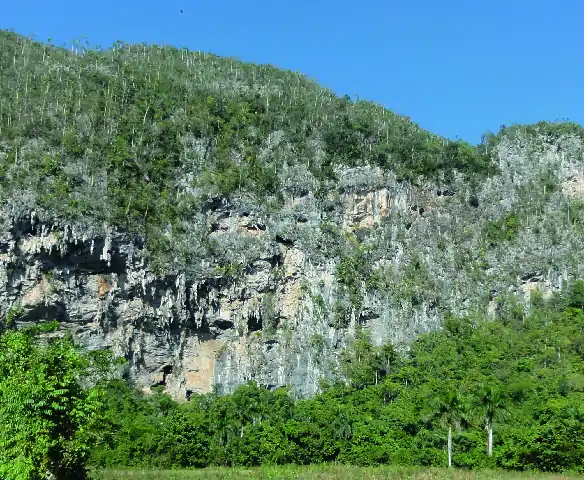
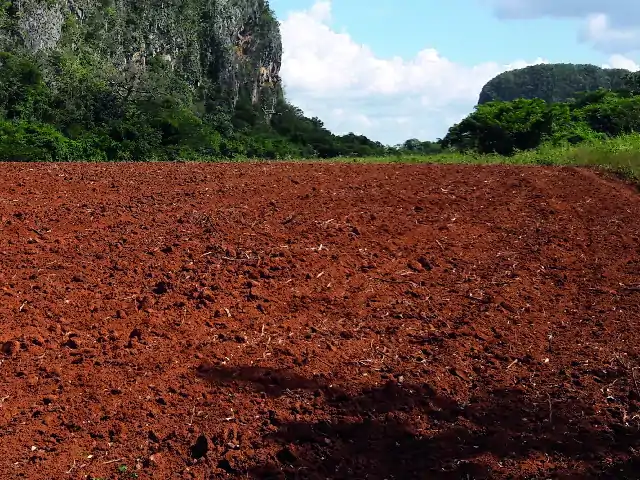
Viñales is located in western Cuba, in the Guaniguanico mountain range with a NE-SW orientation. This range is divided into two parts: the Rosario Mountains to the northeast and the Órganos Mountains to the southwest, where Viñales is situated. These mountains stand out in the landscape because the surrounding topography is very flat. Over 90% of Viñales’ surface is covered by limestone rocks that have developed a karst landscape with typical formations called mogotes.
THE STRATIGRAPHIC COLUMN: A REVIEW OF VIÑALES' GEOLOGICAL HISTORY
The collision of the volcanic island arc (future Cuba) with the North American Plate caused intense deformation of the rocks, generating tectonic structures like folds, faults, and thrusts, which gave rise to mountain ranges like Guaniguanico. By undoing these structures, the original arrangement of the strata before deformation can be reconstructed.
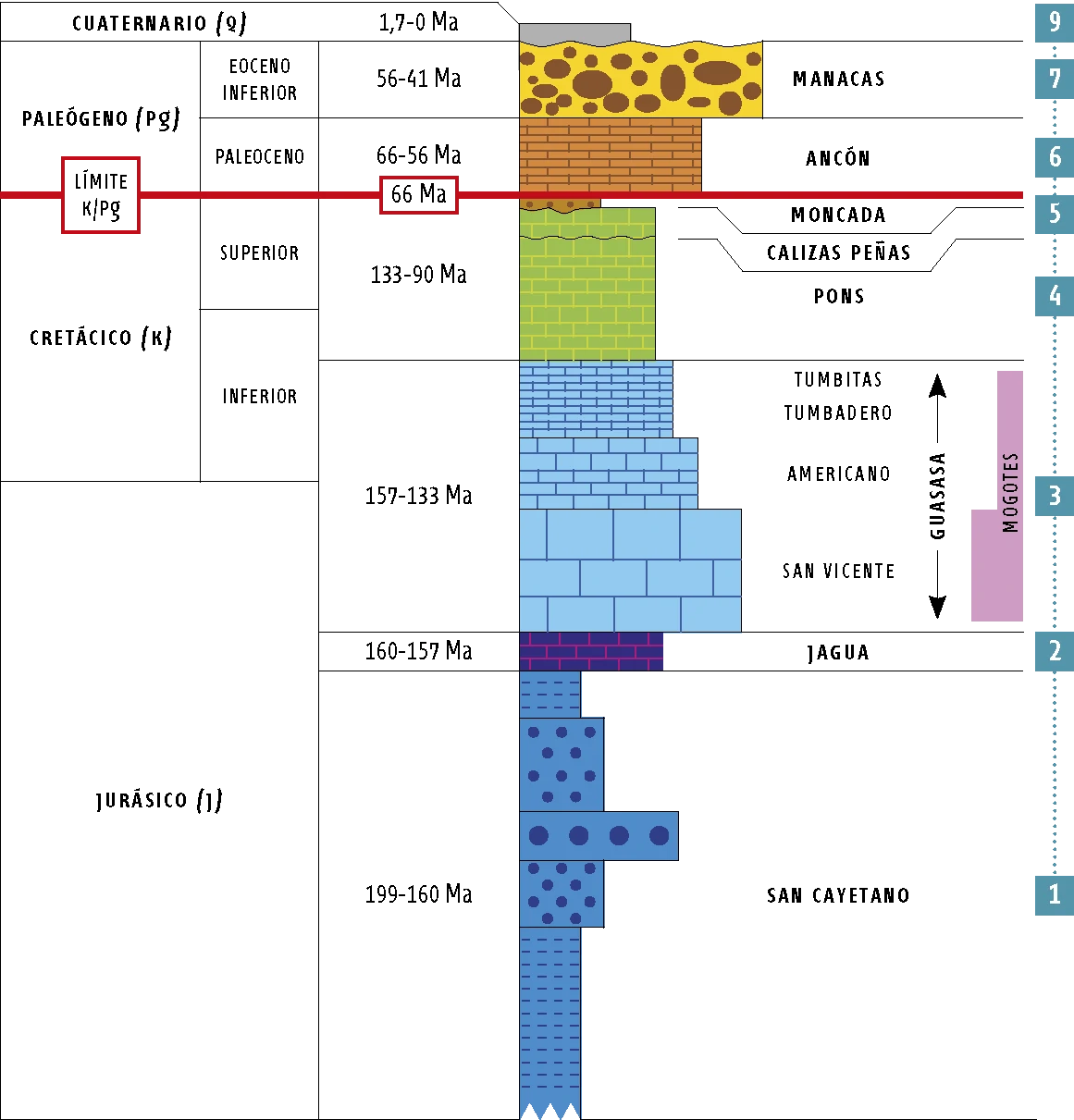
In Viñales, the stratigraphic units (from oldest to youngest) are grouped into formations, sets of similar rocks that may span different ages. These are named after the area where they best outcrop (e.g., Guasasa Formation, composed of massive limestones from the Jurassic and Lower Cretaceous). Some formations are divided into members.
1. Lower-Upper Jurassic (199.5–160 Ma)
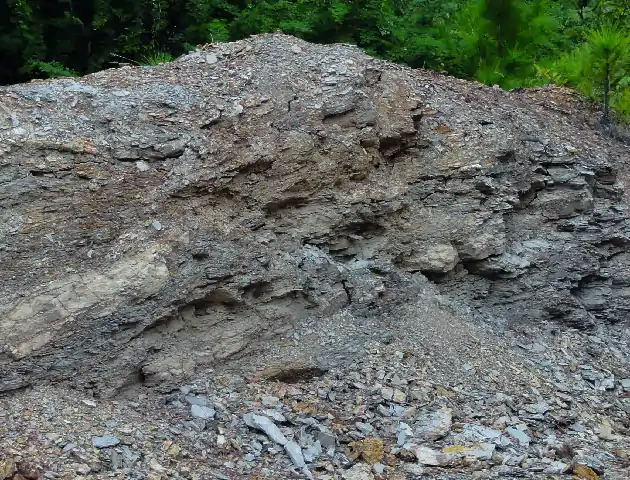
The oldest sedimentary rocks in Cuba correspond to the San Cayetano Formation, dated paleontologically. It is mainly composed of sandstones, with lesser proportions of shales, conglomerates, and claystones, deposited in coastal and deltaic environments. They exhibit slight metamorphism, giving them a slate-like appearance.
Another subdivision is the El Americano unit, formed by dark dolomitic limestones deposited in organic-rich waters. The Tumbadero subunit consists of stratified micrites with intercalations of dark flint (chert), while Tumbitas is composed of light microgranular limestones with thick stratification.
These formations, with finer strata, generate gentler reliefs and smaller mogotes, contrasting with the large mogotes formed by the massive limestones of San Vicente.
2. Upper Jurassic (160–157.2 Ma)
Above the San Cayetano Formation, through a transitional contact, the Jagua Formation appears. In the lower part, laminated claystones predominate with fine intercalations of limestone layers, which increase in presence toward the upper members. Fossil remains are more frequent in the Jagua Vieja and Pan de Azúcar Members.
4. Lower Cretaceous–Upper Cretaceous (132.9–89.8 Ma)
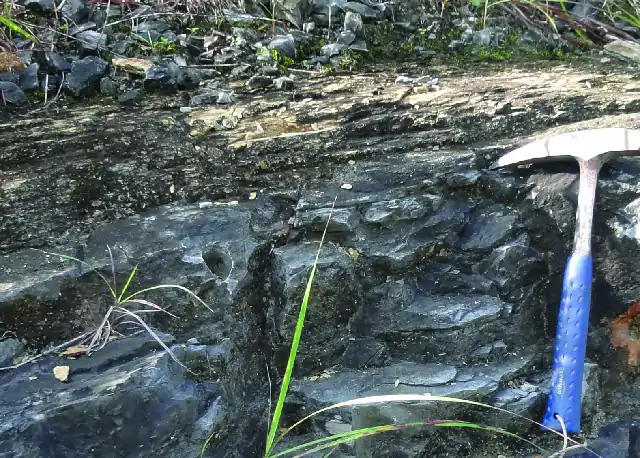
The Pons Formation consists of dark, well-stratified micrites and gray-black chert nodules. They were deposited in a deep marine basin. The informal Peñas unit comprises dark gray to black micrites, well-stratified with intercalations of black chert from the Campanian-Maastrichtian age.
3. Upper Jurassic–Lower Cretaceous (157.2–132.9 Ma)
The next unit is a thick package of limestones called the Guasasa Formation, where the mogotes primarily develop. These rocks were also deposited on the seafloor. Subdivisions (members) can be distinguished: the most important are the San Vicente limestones, a thick bank of massive gray limestones. Being massive rocks, they are harder to erode and thus form the most abrupt reliefs, in the shape of mogotes that stand out in the landscape.
5. Upper Cretaceous–Paleogene (68–66 Ma)
The Moncada Formation is made up of calcirudites transitioning to calcarenites and a layer of clay with high iridium content. Between the previous Pons unit and this one, there is erosion and an absence of rocks for over 21 million years, known as a “hiatus.” The upper part of the Moncada Formation corresponds to the Cretaceous-Paleogene boundary, known as the K/Pg boundary, characterized by the impact of a large meteorite believed to have caused the extinction of the dinosaurs.
6. Paleogene Paleocene (66–65 Ma)
The first rocks after the meteorite impact correspond to the Ancón Formation, mainly composed of well-stratified, wine-colored, clayey limestones, marls, and calcareous breccias with fragments of limestones and cherts. These sediments were deposited in a deep marine basin.
8. Quaternary [Pleistocene-Holocene] (2.5 Ma–present)
Unconsolidated sediments of clays, sands, and gravels may appear in valley bottoms. In caves, they are alluvial-karstic and may contain fossils of extinct vertebrates.
7. Paleogene [Lower Eocene] (56–41.2 Ma)
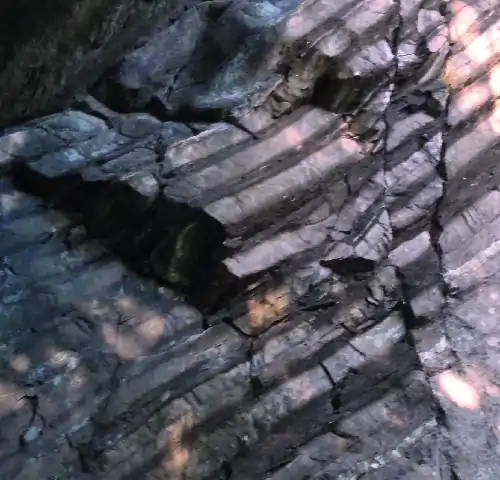
Above the previous sequence lie deposits in the form of breccias from the Manacas Formation, linked to the emplacement of the Guaniguanico thrust units between the late Paleocene and early Eocene. This breccia corresponds to olistostromes: chaotic sediments composed of fragments of various rocks—blocks of sandstones, siltstones, calcarenites, limestones, and basic and metamorphic rocks like serpentinites. The latter rocks originate from the mantle and oceanic crust trapped during the collision.
THE FOSSILS OF VIÑALES TEACH US ABOUT CUBA'S FAUNA MILLIONS OF YEARS AGO
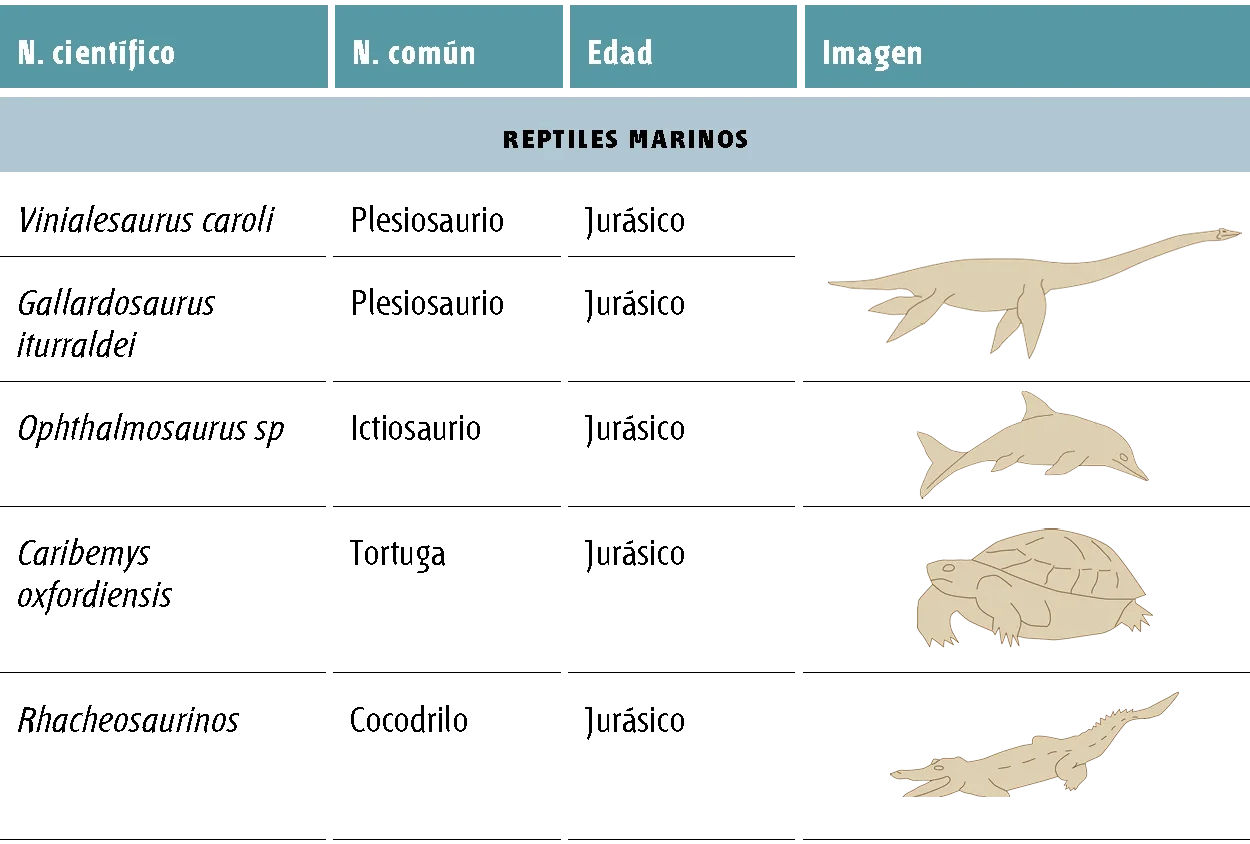
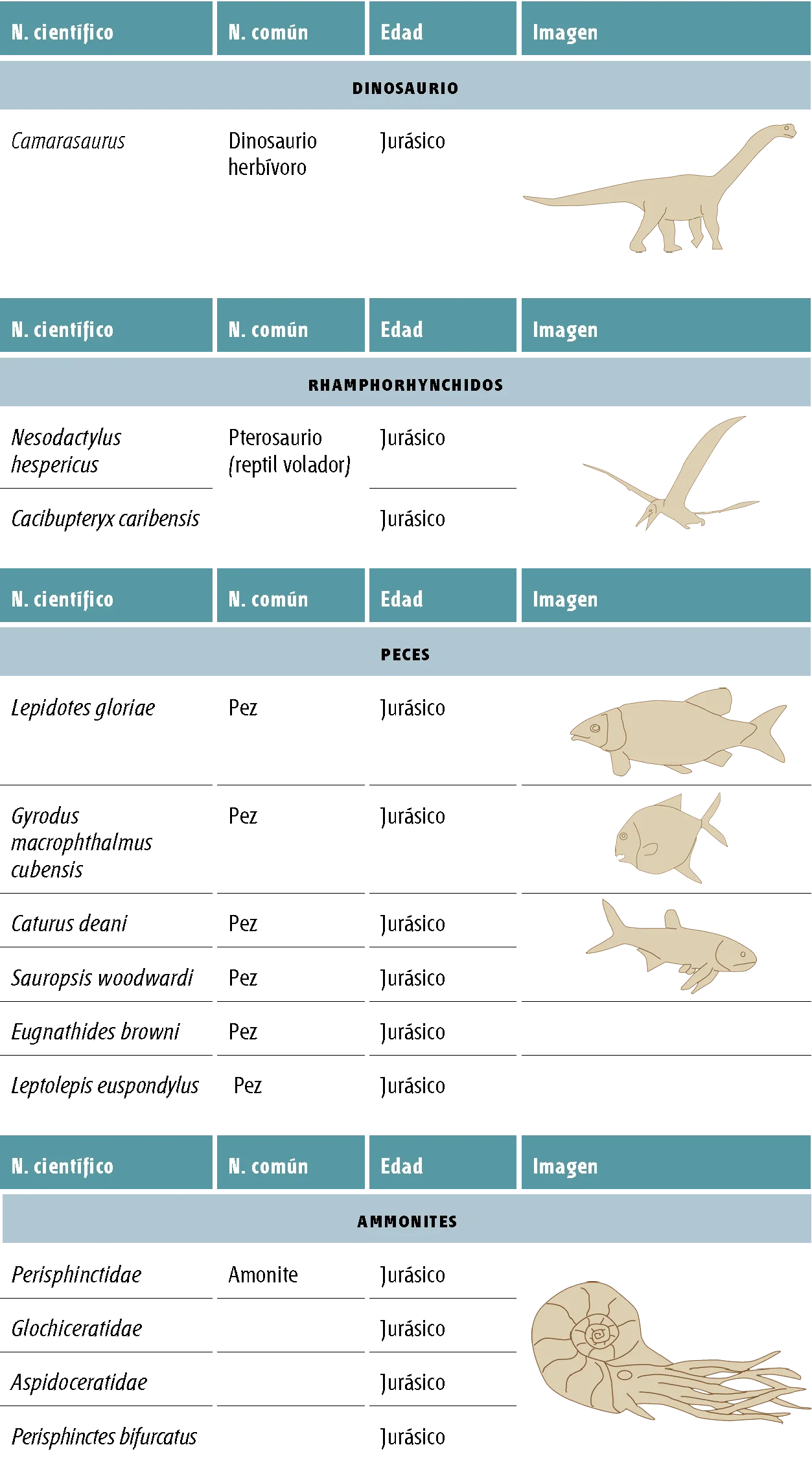
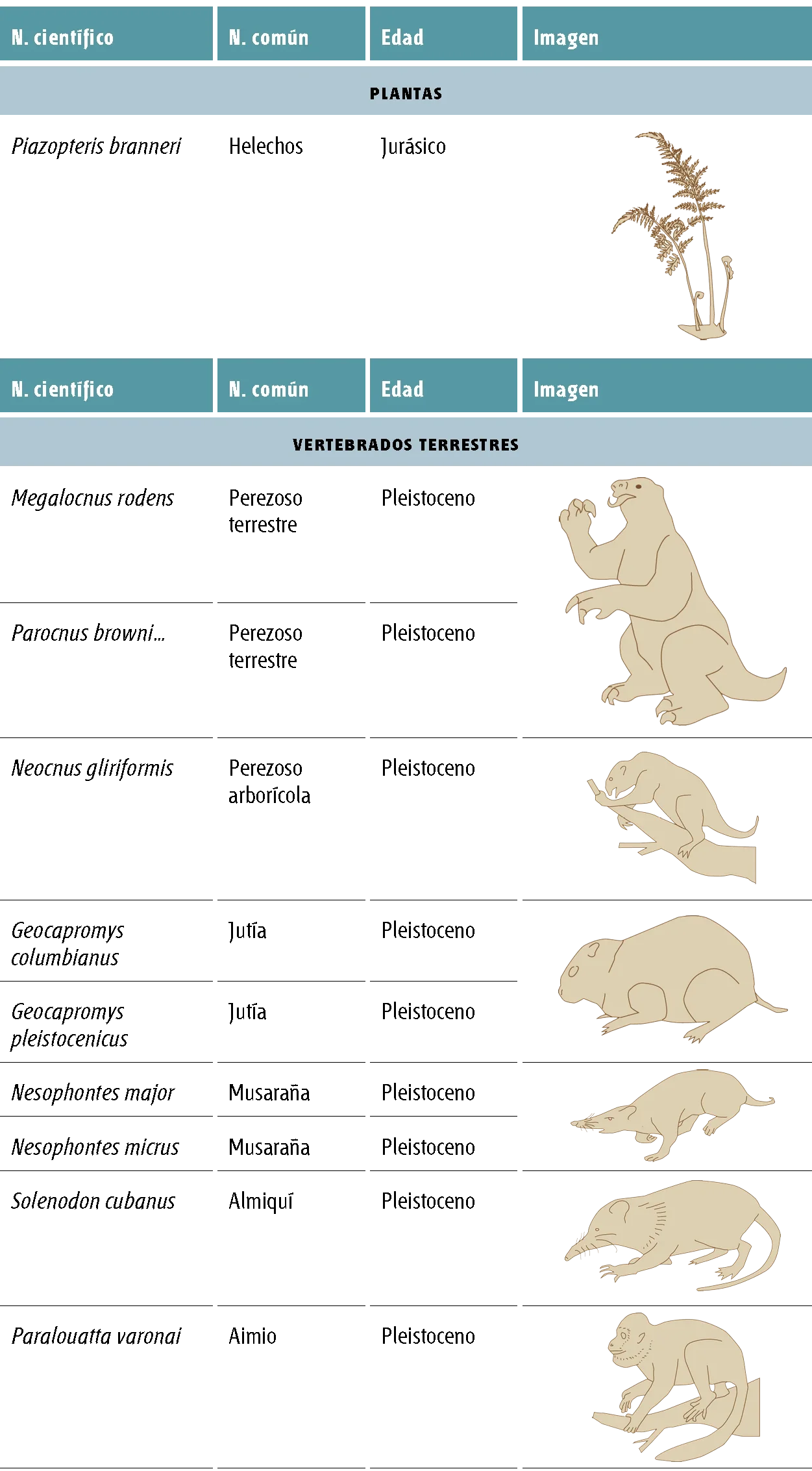
Viñales hosts some of Cuba’s most important fossil deposits, especially from the Jurassic period, with notable sites like Pan de Azúcar, Hoyos de San Antonio, and Valle de la Jutía. These locations contain a wide variety of ammonites, fish remains, and marine reptiles. One of the most remarkable discoveries is that of giant reptiles, such as “Viñalesaurus caroli” and “Gallardosaurus iturraldei,” a marine carnivorous species from the Caribbean, found in Hoyos de San Antonio. Additionally, there are significant Quaternary deposits in cave systems like GEDA Cave (east), Gran Caverna de Santo Tomás (west), and Constantino Cave (north-central).
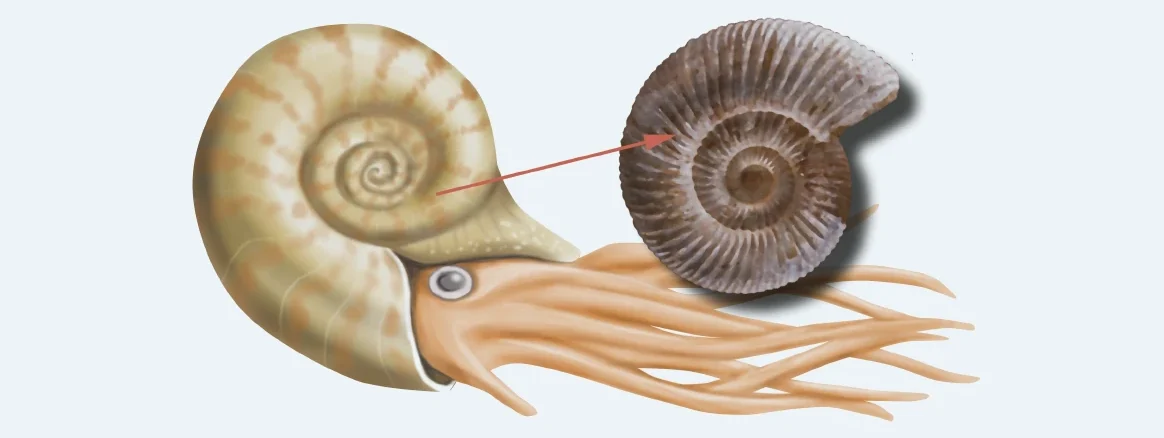
Ammonoids (Ammonoidea), known as ammonites, were cephalopod mollusks that lived from the Devonian (400 million years ago) to the Cretaceous (65.5 million years ago). Due to their rapid evolution and wide distribution, they are essential guide fossils for dating rocks and establishing high-precision biozones in biostratigraphy.
MAIN FOSSILS FOUND IN VIÑALES
Want to Know More?
Discover it in our geological guide to Viñales Geopark!
These are just some of the fundamental concepts that will help you appreciate the geology around you. If your curiosity is piqued and you wish to delve deeper into Viñales’ geological secrets, we invite you to acquire our complete guide.
Perfect for curious travelers, students, teachers, and nature lovers.